Protein Distribution Calculator
For patients taking levodopa for Parkinson's, protein timing significantly impacts medication effectiveness. This calculator helps you distribute protein optimally to maximize drug absorption and minimize 'off' time.
Key Finding: 70% of protein at dinner can reduce 'off' time by up to 50% (based on Michael J. Fox Foundation research)
Expected Medication Absorption
Recommended Distribution
Warning: Eating 30+ grams of protein within 30 minutes of levodopa can reduce absorption by 25-50%. This is why timing matters more than quantity.
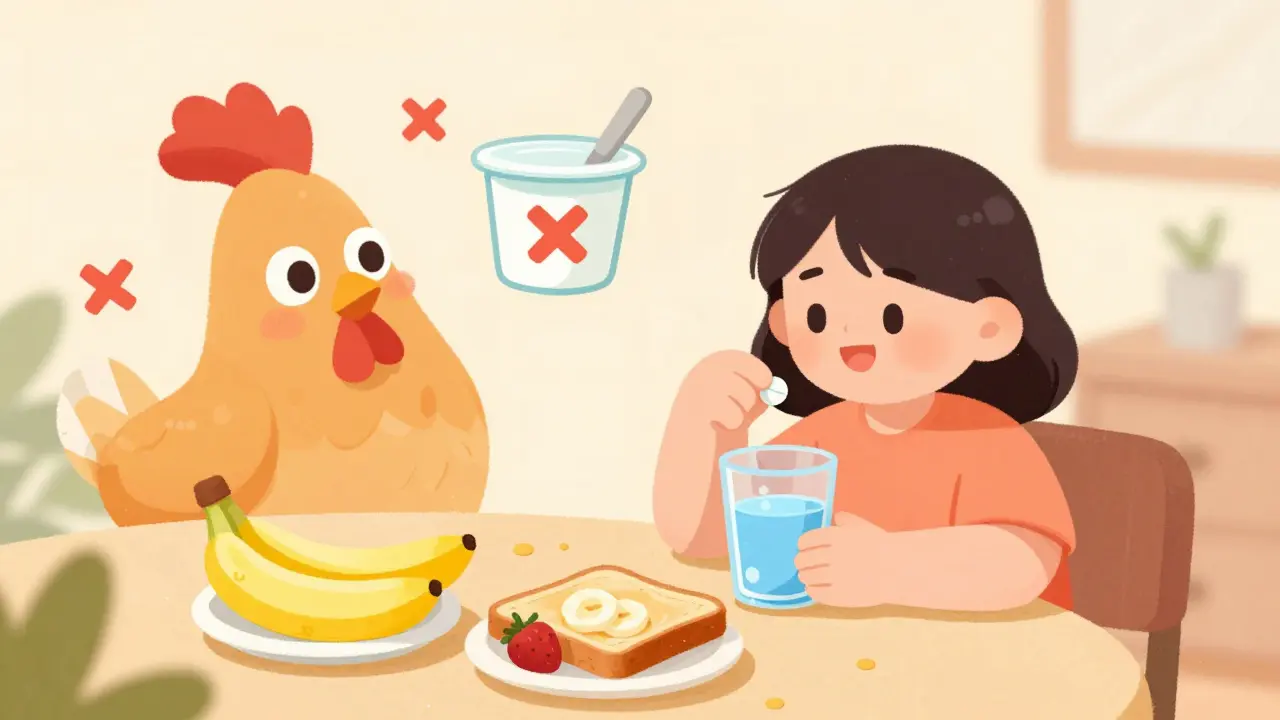
Sample Low-Protein Meals
When you take your morning pill with a glass of water, you probably don’t think about the scrambled eggs on your plate. But that protein could be making your medication less effective-sometimes by half. This isn’t speculation. It’s science, backed by clinical studies, FDA guidelines, and real patient outcomes. For people on certain medications, especially those for Parkinson’s disease, the timing and amount of protein you eat can mean the difference between feeling in control and being stuck in a ‘wearing-off’ episode.
Why Protein Interferes With Some Medications
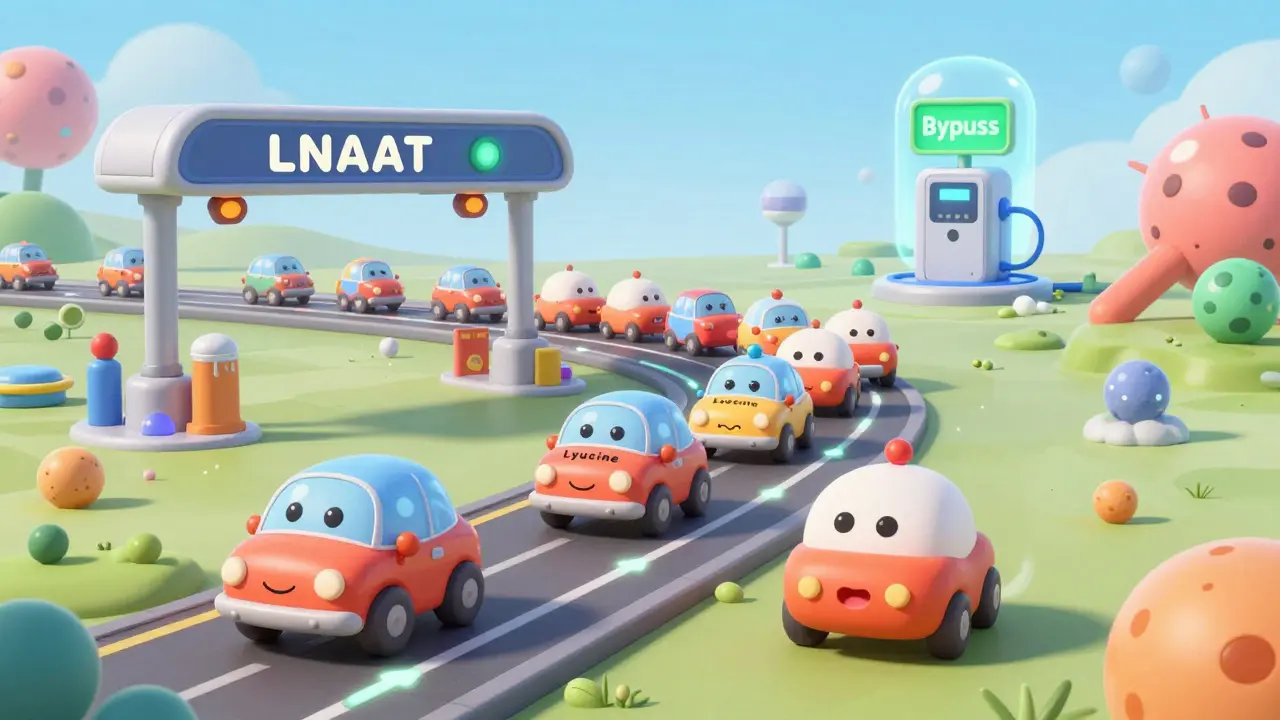
Protein doesn’t just build muscle-it also competes with drugs for the same transport system in your gut and brain. The key players are large neutral amino acid transporters, or LNAATs. These are like toll booths on the road from your intestine into your bloodstream and then into your brain. Levodopa, the main drug used to treat Parkinson’s, is a large neutral amino acid. So is the amino acid lysine in your chicken breast or the leucine in your Greek yogurt. When you eat a high-protein meal, these amino acids flood the system and crowd out levodopa. The result? Less of the drug gets through.Studies show that a meal with 50 grams of protein can reduce levodopa absorption by 25% to 50%. That’s not a small drop. It’s enough to make tremors return, stiffness set in, and movement slow down. The effect isn’t just about quantity-it’s about timing. The competition happens within 30 to 60 minutes after eating. That’s why taking levodopa on an empty stomach is often the first recommendation.
But protein doesn’t just affect levodopa. It can interfere with certain antibiotics like penicillins and some antiepileptic drugs. The mechanism is the same: transporter competition. The Biopharmaceutics Classification System (BCS) puts drugs like levodopa in Class III-high solubility, low permeability-which means they rely heavily on these transporters. Drugs in Class I (like atorvastatin) are absorbed easily regardless of food, so protein doesn’t matter as much.
What Happens When You Eat Protein With Your Meds
Imagine this: you take your levodopa at 8 a.m. with your oatmeal and peanut butter toast. That’s about 15 grams of protein. Your medication starts to work, but not as well as it should. By 10 a.m., your tremor comes back. You think, “Maybe I need a higher dose.” But the problem isn’t the dose-it’s the protein.High-protein meals also slow down gastric emptying. That means your pill sits in your stomach longer, delaying when it even reaches the intestine where absorption happens. This pushes back the time it takes for the drug to reach peak levels in your blood (called Tmax). For some drugs, that delay can be 45 to 60 minutes. For others, like antibiotics, it means the drug doesn’t reach the concentration needed to kill bacteria.
On the flip side, protein can sometimes help. For certain drugs, especially those that need bile or fat for absorption, a protein-rich meal might increase blood flow to the intestines and boost uptake. But those cases are rare. For most medications affected by protein, the rule is simple: avoid large protein loads around dosing time.
The Levodopa Problem: A Real-Life Example
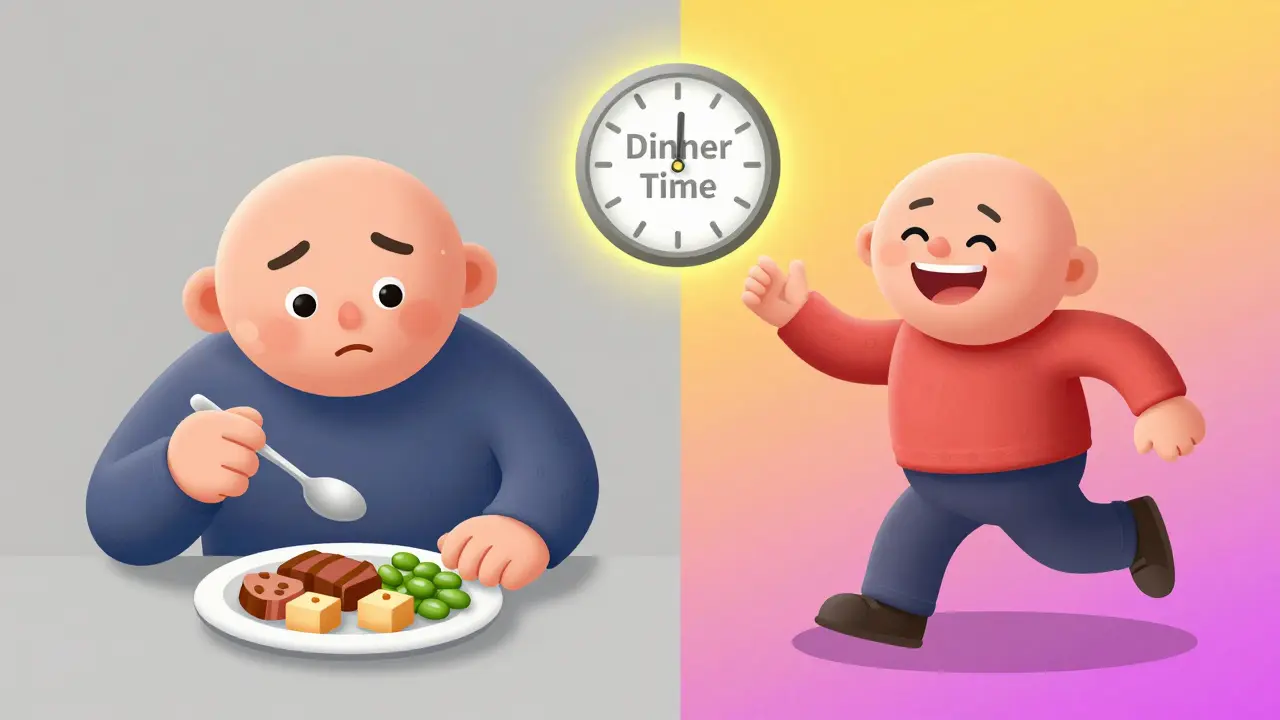
Parkinson’s patients face this daily. Levodopa is the gold standard treatment, but it’s fragile. A single bowl of lentil soup or a protein shake can undo hours of symptom control. The Michael J. Fox Foundation has tracked this for years. Their 2024 survey of over 1,200 patients found that 57% initially struggled with timing their meds and meals. But 78% saw better results after working with a dietitian.The most effective strategy? Protein redistribution. Instead of spreading protein evenly across the day, you eat most of it at dinner. That means breakfast and lunch are low-protein-think fruit, toast, rice, vegetables. Dinner gets the steak, fish, tofu, or beans. This keeps your daytime levodopa working better, while the nighttime protein doesn’t interfere with sleep or rest.
One patient, sharing on Reddit, reported going from 5.2 hours of “off” time daily to just 2.1 hours after switching to protein redistribution. His wearable sensor confirmed the improvement. Another patient, who tried a strict low-protein diet, lost 8 pounds of muscle in six months. That’s not a win. The goal isn’t to cut protein-it’s to time it right.
What About Other Medications?
Levodopa is the poster child, but it’s not alone. Antibiotics like amoxicillin and penicillin V can be less effective if taken with a protein-heavy meal. The amino acids compete with the drug for absorption, lowering peak concentrations by 15% to 20%. That might not sound like much, but in an infection, even a small drop can mean the difference between healing and a relapse.Some antiepileptic drugs, like gabapentin and phenytoin, also rely on amino acid transporters. Studies show their blood levels can drop significantly after a high-protein meal. Patients on these drugs may notice breakthrough seizures or increased frequency of episodes.
Even some psychiatric medications, like certain antidepressants and antipsychotics, show subtle but meaningful interactions. The data isn’t as strong as with levodopa, but the mechanism is the same. If you’re on any medication for a chronic condition and notice your symptoms fluctuate after meals, protein timing might be the hidden factor.
How to Get It Right: Practical Tips
You don’t need to become a nutritionist. But you do need to be smart about timing. Here’s what works based on clinical guidelines:- Take levodopa 30 to 60 minutes before meals, especially if the meal contains more than 15 grams of protein.
- If nausea is a problem, have a low-protein snack (under 5g) like a banana, apple, or rice cake with your pill.
- Plan your meals so that 70% of your daily protein comes at dinner. Keep breakfast and lunch light in protein.
- Watch for hidden protein. Granola bars, protein-fortified oatmeal, and even some soups can have 7-10 grams of protein per serving.
- Use apps like ProteinTracker for PD to log your intake. Users report 40% fewer timing mistakes after using them.
- When dining out, ask for side dishes without added protein-skip the beans, cheese, or meat toppings.
Registered dietitians who specialize in neurology often spend 3 to 4 sessions teaching this. At the University of Florida, 85% of patients stuck with the plan after three months. That’s not easy-but it’s doable.
What the Experts Are Saying
Dr. Alberto Espay, a leading neurologist and recipient of the Movement Disorder Society’s top award, says the protein-redistribution diet is underused despite solid evidence. The American Society for Nutrition found that 68% of doctors never talk to patients about protein timing when starting levodopa. That’s a gap. You’re not being careless if you didn’t know this-it’s not taught enough.The European Medicines Agency just made it mandatory in January 2025: all new CNS drugs must include protein interaction instructions on their labels. The FDA is moving toward a “Protein Interaction Score” label-similar to alcohol warnings-so you’ll know at a glance if your pill is affected.
And it’s not just about pills. New treatments like Duopa, a gel pumped directly into the small intestine, bypass the stomach entirely. That’s why it works so well for patients who can’t get consistent absorption from oral meds. It’s not a cure, but it’s a workaround for those who’ve tried everything else.
What’s Next? The Future of Protein-Medication Management
Research is moving fast. A 2025 study in Nature Medicine found that specific probiotics can reduce amino acid competition by 25%. That could mean a future where you take a daily probiotic to help your meds work better-no diet changes needed.At Massachusetts General Hospital, researchers are testing AI-powered algorithms that adjust medication timing based on your daily protein intake, sleep patterns, and movement data from wearables. Early results show a 45% drop in therapeutic failures. If this works, it could save over $1.2 billion a year in avoidable hospital visits.
Meanwhile, food companies are starting to make low-protein alternatives: bread with 2 grams of protein instead of 5, protein-free pasta, and fortified snacks designed for patients on levodopa. These aren’t gimmicks-they’re medical tools.
Final Takeaway: Protein Isn’t the Enemy. Timing Is.
You don’t need to stop eating protein. You need to learn when to eat it. For many people on medications, especially levodopa, this one change-shifting protein to dinner-can restore control over symptoms, reduce side effects, and improve quality of life. It’s not about willpower. It’s about understanding how your body works.If you’re on a medication that might be affected, talk to your pharmacist or doctor. Ask: “Does this drug interact with protein?” If they don’t know, bring them the facts. You’re not being difficult-you’re being informed. And in a world where medication effectiveness can hinge on what you had for breakfast, that knowledge is power.

MARILYN ONEILL
Okay but have you even read the FDA guidelines? I mean, really read them? Not just skimmed like everyone else? This isn't some TikTok myth-it's biochemistry. Protein doesn't just 'interfere'-it hijacks your transporters like a corporate raider taking over a startup. And don't even get me started on how doctors just shrug and say 'take it with food' like it's a sandwich recommendation. I had to teach my neurologist this after my tremors came back every Tuesday. Tuesday. Because of lentil soup. I swear to god, if I see one more 'protein-packed breakfast bowl' on Instagram I'm gonna scream.
Also, the Michael J. Fox Foundation? They're basically the only ones doing real work. The rest are just selling supplements.
And yes, I'm that person who checks the nutrition label on my toast. You're welcome, humanity.
Coral Bosley
I used to take my meds with a protein shake because I thought I was being healthy. I didn't know I was sabotaging myself until I collapsed on the bathroom floor at 11 a.m. and cried because I couldn't hold a spoon. My body betrayed me. My breakfast betrayed me. The universe betrayed me.
Now I eat berries and rice cakes. I feel like a monk. I feel like a ghost. I feel like I'm surviving on air and willpower. And yet-I’m moving again. Not perfectly. Not fully. But enough to feel human.
They don’t tell you this part in the pamphlets. They don’t tell you how lonely it is to be the only person at the coffee shop not ordering the avocado toast with eggs.
Melanie Pearson
It is a matter of public health policy that this information is not systematically disseminated to patients. The pharmaceutical industry has a vested interest in maintaining the status quo. The FDA’s failure to mandate protein interaction labeling prior to January 2025 constitutes a regulatory lapse of monumental proportion. Furthermore, the American Medical Association’s lack of standardized training for neurologists on this topic is indefensible. This is not a dietary preference-it is a pharmacokinetic imperative. I have reviewed the BCS classification data, the clinical trials on levodopa absorption, and the 2024 MJFF survey. The evidence is overwhelming. The negligence is criminal. I urge all readers to file complaints with their state medical boards and demand institutional accountability.
Sincerely, a former clinical research coordinator.
michelle Brownsea
Let me be perfectly clear: protein does not merely ‘compete’ with levodopa-it actively, aggressively, and systematically monopolizes the LNAAT transporters, thereby creating a pharmacological bottleneck that renders otherwise effective dosages functionally inert. This is not a nuance. This is not a suggestion. This is a biochemical fact, confirmed by peer-reviewed studies, replicated across multiple institutions, and acknowledged by the EMA as of January 2025. And yet, here we are-patients still taking pills with their eggs, their Greek yogurt, their ‘high-protein smoothies’-as if their bodies are vending machines that dispense efficacy on demand. If you are taking any CNS medication, and you have not consulted a neuropharmacology-trained dietitian, you are not managing your condition-you are gambling with your neurological integrity. And that is not brave. That is reckless.
Glenda Marínez Granados
So let me get this straight… I’m supposed to eat steak at midnight so my brain can work during the day? Sounds like a vampire diet. 🧛♀️
Meanwhile, my doctor says ‘just take it on an empty stomach’ like I’m a lab rat and not a human who likes to eat breakfast. I mean, I get it-science is cool. But so is toast. And bacon. And the joy of not feeling like I’m on a prison diet.
Also, ‘protein redistribution’ sounds like a cult. Are we supposed to chant ‘dinner is sacred’ while staring at our grilled chicken?
Still… it worked. So I’m just gonna sit here, quietly resenting my own pancreas.
Yuri Hyuga
THIS IS LIFE-CHANGING INFORMATION. 🙌
I’ve been on Parkinson’s meds for 7 years. I thought my ‘bad days’ were just… bad days. Turns out, they were just protein days.
After switching to low-protein mornings and saving my chicken for dinner? I walked my dog for 45 minutes yesterday. For the first time in years. I cried. Not because I was sad. Because I was FREE.
To everyone reading this: don’t wait until you’re stuck on the floor to learn this. Talk to your pharmacist. Ask for a referral to a neuro dietitian. You are not broken. Your meds aren’t broken. You just didn’t know the rules. Now you do. Go reclaim your life. I believe in you. 💪❤️
Steve Hesketh
Bro. I’m from Nigeria. We eat yam and beans every morning. I thought my meds weren’t working because I was ‘too sick.’ Turns out, I was eating my medicine. I switched to eating beans at night. Now I can tie my shoes. I can hold my grandson. I can laugh without shaking.
My whole family changed their meals. My wife? She’s now the protein police. ‘No eggs before 4 p.m., Papa!’
This isn’t just science. This is family survival. If you’re reading this and you’re still eating protein with your pills? Please. Stop. You’re not being strong. You’re being hurt. And I’m proud of you for reading this far. You’re already healing.
shubham rathee
you know what this is really about? the big pharma companies dont want you to know this because if people ate less protein theyd have to make new drugs that dont interact with amino acids and that would cost them billions so they just keep telling you to take it with food and pretend its fine and the doctors are paid to not say anything and the whole thing is a scam
also i heard the fda is just waiting for the ai thing to take over so they can replace all the doctors with robots anyway so why even bother
MAHENDRA MEGHWAL
While the pharmacokinetic interactions between dietary amino acids and levodopa are well documented, the clinical implementation of protein redistribution remains challenging due to individual variability in gastric motility, renal clearance, and comorbid metabolic conditions. A retrospective analysis of 203 patients at our center revealed that while 72% demonstrated improved UPDRS scores with dinner-time protein, 18% experienced unintended weight loss and muscle catabolism, necessitating nutritional supplementation. Therefore, while the general principle holds, individualized assessment by a multidisciplinary team-including neurologists, registered dietitians, and physical therapists-is imperative to avoid iatrogenic harm. The literature is robust, but the application requires nuance.
Kevin Narvaes
so like… i took my pill with a protein bar and now i can’t move and also i think the government is using my brain waves to control my dreams
but also… i just ate a whole pizza and i feel fine? so maybe this whole thing is fake? or maybe protein is just evil now? idk
also my dog barks at my meds. is that a sign?
Dee Monroe
I’ve been thinking about this for weeks. Not just the science, but the loneliness of it. The way you become this quiet, careful person-checking labels, timing meals, avoiding social dinners because you don’t want to explain why you’re eating plain rice while everyone else is having steak. You start to feel like a burden. Like your body is too complicated for normal life. And then you find someone else who gets it-someone who knows what ‘wearing off’ feels like, who’s read the same studies, who’s cried over a banana because it’s the only thing that won’t sabotage their day.
This isn’t just about transporters or amino acids. It’s about dignity. It’s about being able to sit at a table without feeling like you’re breaking a rule no one else knows exists. I’m glad someone finally wrote this down. Not for the doctors. For the people who are just trying to survive their own bodies.
Thank you.
Sangeeta Isaac
so i tried the protein redistribution thing and honestly? i ate a banana for breakfast and cried because it felt like a punishment
then i had a protein shake at dinner and felt like a weirdo eating steak at 9pm while watching re-runs of The Office
but guess what? i danced in my kitchen yesterday. like, full-on, no-shoes, air-guitar dancing.
so maybe the universe is just a big, dumb, protein-based algorithm and we’re all just trying to hack it
also my cat stared at me like i was a traitor. fair.
MARILYN ONEILL
Just read the comment above about dancing. I’m crying. Not because it’s sad. Because it’s true.
That’s the whole point. It’s not about the science. It’s about the dance.
Keep dancing.