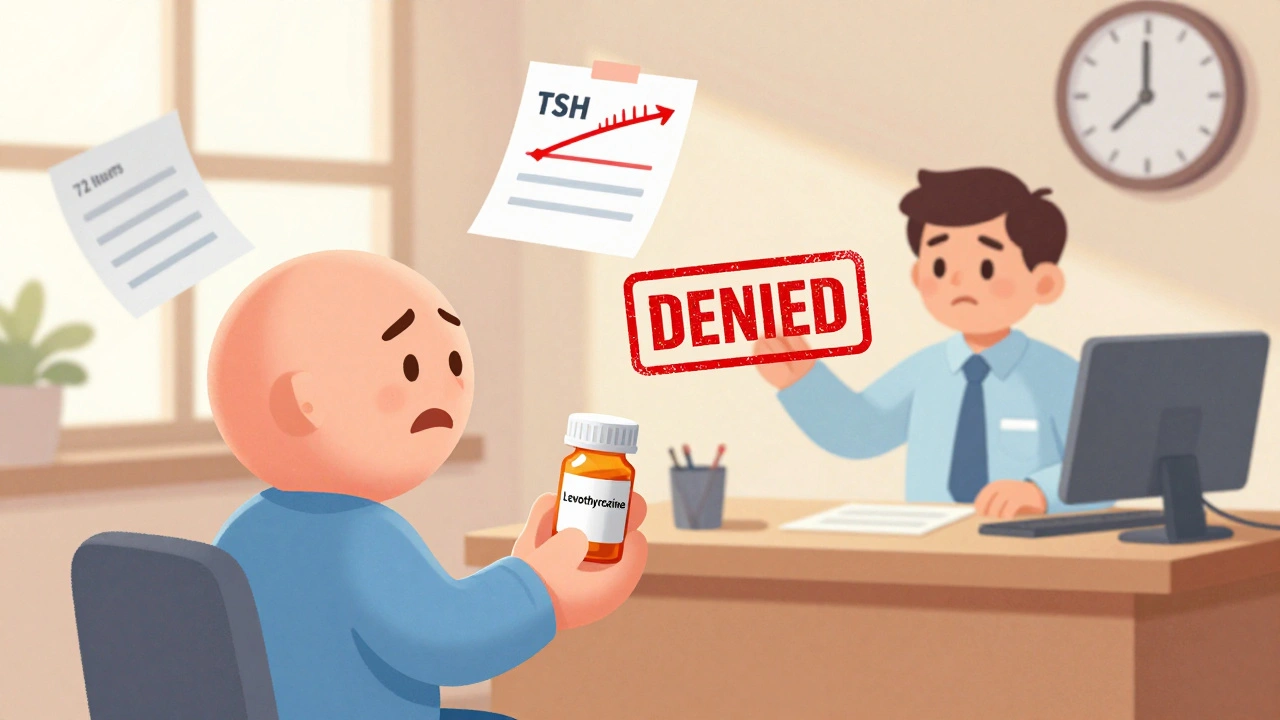
When your doctor prescribes a medication like levothyroxine or phenytoin, you expect to fill it without delay. But for people taking NTI drugs, that’s not always the case. Even when a generic version exists, insurers sometimes demand the brand-name version-and require prior authorization to get it. This isn’t about cost-cutting alone. It’s about survival.
What Makes NTI Drugs Different?
Narrow therapeutic index (NTI) drugs are not like regular medications. They have a razor-thin margin between the dose that works and the dose that harms. A 5% change in blood concentration can mean the difference between seizure control and a life-threatening episode, or stable thyroid levels and dangerous heart rhythm issues. The FDA defines NTI drugs as those where small differences in dose or blood concentration can lead to serious therapeutic failures. That’s why switching from brand to generic-or even between generic manufacturers-can be risky. Drugs like levothyroxine (for hypothyroidism), phenytoin and carbamazepine (for epilepsy), warfarin (a blood thinner), and cyclosporine (for organ transplants) fall into this category. DrugBank lists about 37 medications with this classification. Unlike most drugs, where generics are considered interchangeable, NTI drugs demand consistency. Your body doesn’t adapt well to changes in formulation. A patient stable on brand-name Keppra for years might have a seizure after switching to a generic version with slightly different inactive ingredients. That’s not a coincidence. It’s pharmacology.Why Insurers Push for Generics-And Why That’s Dangerous
Insurance companies love generics. They’re cheaper. For most drugs, switching to a generic saves money with no loss in effectiveness. But for NTI drugs, the math doesn’t add up. A 2024 study in the Journal of Managed Care & Specialty Pharmacy found that when prior authorization was required for NTI drugs, approval rates after initial denial were 82.4%. That sounds good-until you realize what happened during those delays. The Patients Rising survey of 1,200 NTI drug users found that 29% experienced adverse health events directly tied to medication interruptions. That’s nearly one in three people who had seizures, thyroid crashes, or dangerous blood clots because they couldn’t get their prescribed drug on time. Insurers often treat NTI drugs like any other medication with a generic alternative. They assume the generic is just as safe. But clinical evidence says otherwise. The American Academy of Neurology reported that 18.7% of epilepsy patients had preventable seizures due to forced generic switches. That’s not a side effect-it’s a systemic failure.When Insurers Require Brand-Name NTI Drugs
Here’s the twist: sometimes, insurers don’t just allow brand-name NTI drugs-they require them. Health Net’s 2023 policy explicitly states that brand-name NTI drugs “may be listed on the Formulary at a higher tier and do not require prior approval.” That’s unusual. Normally, brand-name drugs with generics available need prior authorization. For NTI drugs, the opposite is true. Why? Because the risk of switching is too high. If a patient has been stable on brand-name levothyroxine for six months, and their TSH levels are steady, forcing a switch isn’t just inconvenient-it’s dangerous. Some insurers have learned this the hard way. One Reddit user, a neurologist, shared that 73% of their brand-name levothyroxine requests were initially denied-even when patients showed TSH fluctuations of 300% after generic switches. Medicaid programs have different rules. Federal law requires them to cover drugs excluded from formularies through prior authorization. But states vary wildly. North Carolina requires “medically necessary” written on the prescription. Mississippi uses a universal form submitted via fax or portal. California, as of January 2025, prohibits prior authorization for NTI drugs if the patient’s condition is stable and they’ve been on the same drug before.
The Real Cost of Prior Authorization
Prior authorization isn’t just a form. It’s a time sink-for patients, doctors, and pharmacists. Physician practices spend an average of 16.3 hours per week managing prior authorizations. That’s over $4,380 a week per doctor in administrative costs, according to MGMA. For NTI drugs, the process takes 22% longer than standard requests because insurers demand extra documentation: lab results, weight, height, diagnosis codes, even previous prescription history. Electronic systems have cut processing times by 42%, but NTI requests still take an average of 3.2 business days. That’s three days without the right medication for someone whose condition can unravel in hours. In emergency cases, Medicaid must respond within 24 hours and provide a 72-hour supply. But commercial insurers? No such guarantee. And here’s the kicker: 42% of NTI drug prior authorization requests still take longer than 72 hours to process-even in states with laws mandating faster reviews. The system is broken, and patients are paying the price.What’s Changing? New Laws and Real-World Fixes
Change is coming. Slowly, but it’s coming. By June 2024, 22 states had passed laws limiting prior authorization for NTI drugs. Eighteen states now require automatic approval if insurers don’t respond within the legal timeframe-up from just seven in 2022. The Improving Seniors’ Timely Access to Care Act, passed by Congress in April 2024, mandates real-time electronic prior authorization decisions for Medicare Advantage plans-with special protections for NTI drugs. The 21st Century Cures Act also pushed for transparency. Since its implementation, 37% more NTI drug requests are approved on the first try. That’s because insurers can no longer hide behind vague criteria. They have to state why they’re denying coverage-and many now realize it’s not worth the risk. Industry analysts predict that by 2026, 75% of commercial health plans will eliminate prior authorization for established NTI drug categories. Why? Because the cost of patient harm-hospitalizations, ER visits, lost productivity-far outweighs the savings from generic switches.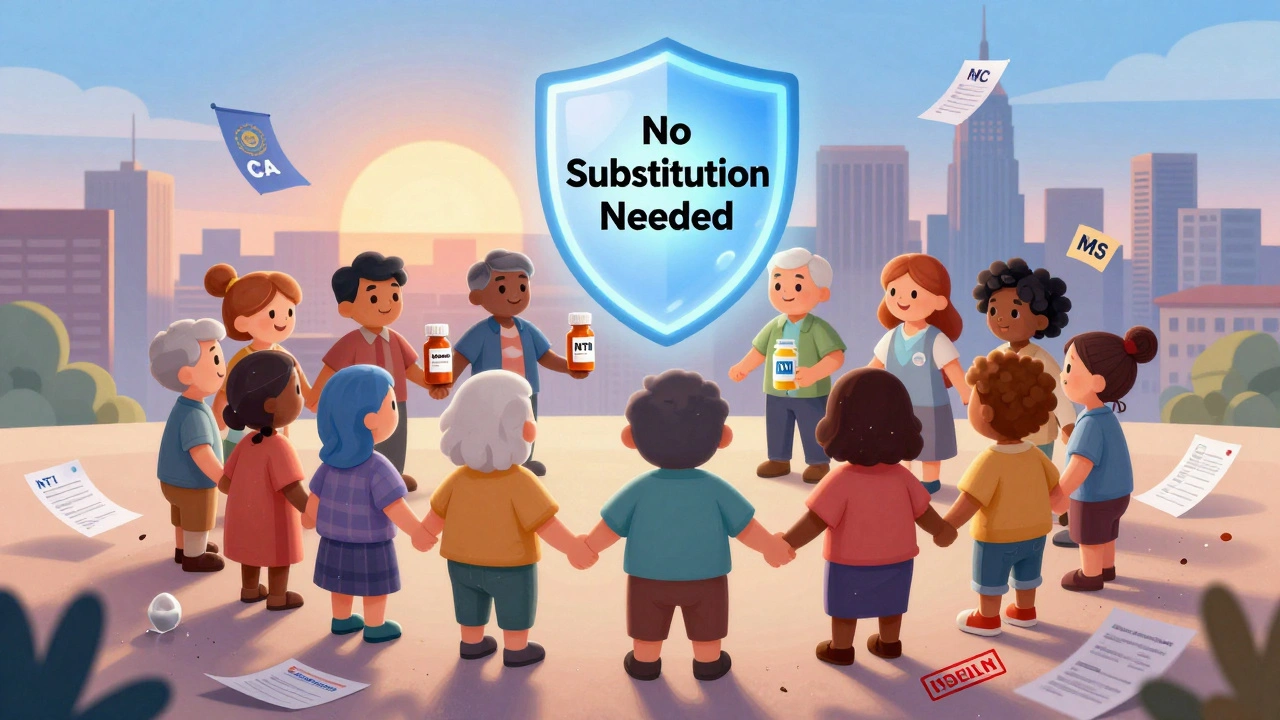
What Patients and Providers Can Do
If you’re on an NTI drug and your insurer denies your brand-name request:- Ask your doctor to write “medically necessary” or “no substitution” on the prescription. This triggers special handling in many states.
- Submit the prior authorization request electronically. Paper fax requests take twice as long.
- Keep records of lab results, seizure logs, or TSH levels that show stability on your current medication.
- Appeal immediately. The approval rate after denial is high-82.4%.
- Check your state’s laws. Some mandate automatic approval after 72 hours.
The Bottom Line
NTI drugs aren’t just another prescription. They’re lifelines. Insurers that treat them like ordinary medications are gambling with lives. The data is clear: forced generic switches cause harm. Prior authorization delays cause harm. And the financial savings? They’re negligible compared to the human cost. The system is slowly correcting itself. Laws are changing. Insurers are learning. But until then, patients and providers must fight for the right medication-the one that keeps them alive, stable, and safe. Because when it comes to NTI drugs, there’s no room for error. And there shouldn’t be any paperwork either.
Helen Maples
The systemic negligence around NTI drugs is criminal. A 300% TSH fluctuation isn't a glitch-it's a medical emergency, and insurers treat it like a spreadsheet error. Doctors spend hours on paperwork while patients suffer seizures or cardiac events. This isn't bureaucracy. It's malpractice by algorithm.
Ashley Farmer
I’ve seen this firsthand. My sister was stable on brand levothyroxine for five years. Switched to generic because of insurance, and within weeks she was in the ER with atrial fibrillation. They didn’t even call her doctor first. Just assumed ‘generic = same.’ It’s not just wrong-it’s cruel.
Olivia Hand
Why does the FDA allow generics to be deemed interchangeable for NTI drugs when the pharmacokinetic variance exceeds therapeutic tolerance? The regulatory framework is outdated. If a drug’s window is 5% and generics vary by 8-12%, they shouldn’t be classified as bioequivalent-they should be labeled as ‘high-risk substitution candidates.’ But that would require transparency insurers don’t want.
Desmond Khoo
Bro this is wild 😳 I had a friend on carbamazepine and they got switched to generic and had a seizure at work. HR called it an ‘unexcused absence.’ Like it was their fault. Insurance saved $12 a month. My friend lost their job. 🤡
Kyle Oksten
This isn’t about cost. It’s about power. Insurers control access to life-sustaining medication through administrative friction. They don’t care if you live or die-they care if the formulary looks clean on quarterly reports. The real NTI drug isn’t levothyroxine-it’s the prior authorization form. It’s the only thing that can kill you slowly and legally.
Sadie Nastor
im so tired of this. my mom had to wait 5 days for her warfarin because the fax got lost. she ended up with a clot. now she’s on blood thinners for life. why does it have to be this hard? 😔
Nicholas Heer
Big Pharma and the FDA are in bed together. The brand-name NTI drugs? All patented by the same 3 corporations. They pay off insurers to block generics so they can keep charging $500 a bottle. Meanwhile, the government lets them get away with it. This is why we need to break up the pharmaceutical cartel. #StopBigPharma
Sangram Lavte
India has the same issue. Many patients here get generic levothyroxine and end up with unstable TSH. But we don’t have the resources to fight insurers. Doctors just prescribe and hope. It’s not ideal. But survival comes before paperwork.
Stacy here
They say it’s about cost, but let’s be real-this is a calculated risk. They know 70% of patients won’t appeal. They know most won’t have the energy to fight. And they know the ones who do? They’re the ones who end up in the ER. That’s not a flaw. That’s the business model. They’re betting lives on actuarial tables.
Kyle Flores
My cousin’s dad died after a generic switch. No one told him the inactive ingredients could trigger arrhythmia. The pharmacist didn’t flag it. The doctor didn’t push back. The insurer didn’t care. Just another number. I wish people talked about this more.
Ryan Sullivan
The entire prior authorization infrastructure is a monument to inefficiency. It’s not about safety-it’s about liability avoidance. Insurers would rather delay a life-saving drug than risk a single claim. The cost of inaction is externalized onto patients. That’s not capitalism. That’s sociopathy dressed in compliance.
Wesley Phillips
Imagine if your car’s airbag had a 1 in 3 chance of failing because the manufacturer swapped out a screw. That’s what they’re doing with NTI drugs. And we’re supposed to be grateful they didn’t switch the whole engine?
Nancy Carlsen
Just want to say thank you to all the doctors and pharmacists fighting this. I know it’s exhausting. You’re the real heroes. 🙏❤️