PRO Reporting Impact Calculator
How Your Reports Change Drug Safety
Traditional safety monitoring relies on doctors reporting side effects during visits. But patients often report many more symptoms than clinicians notice. This calculator shows how much more information you can provide through direct reporting.
Enter the number of patients above to see the difference between traditional reporting and patient-reported outcomes.
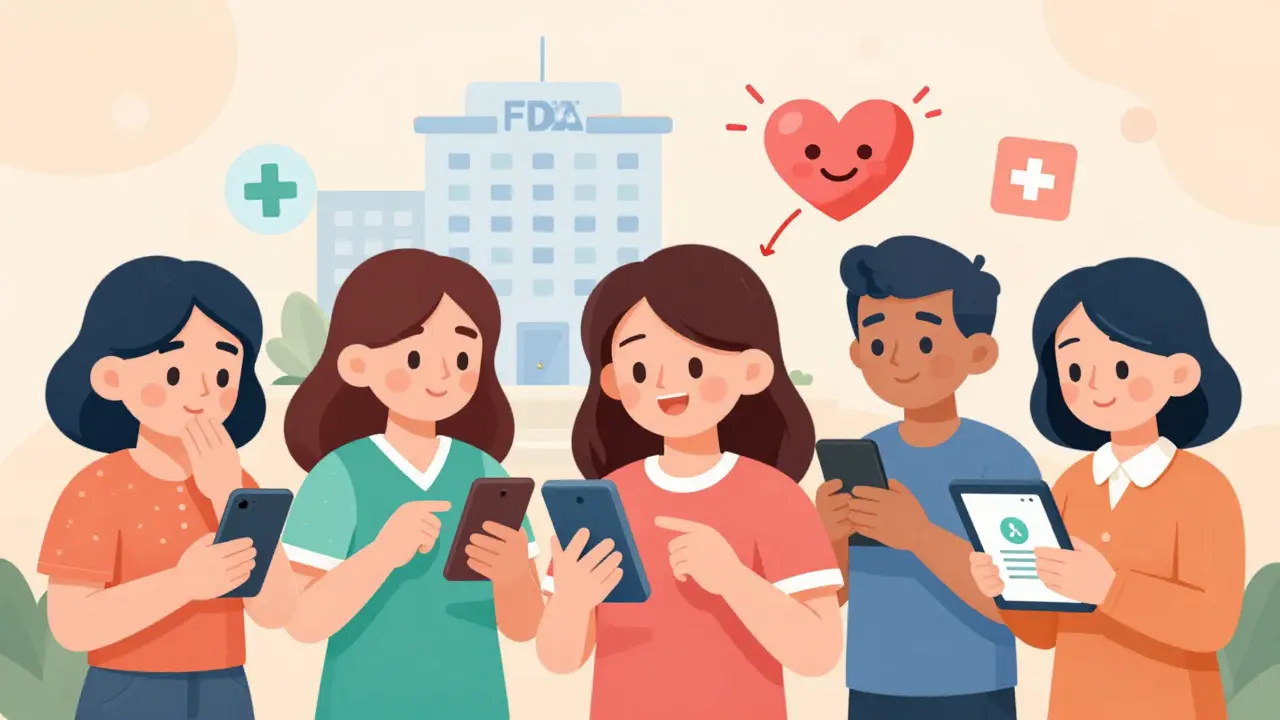
When you take a new medication, your doctor watches for side effects during checkups. But what about the fatigue that hits you at 3 p.m.? The nausea that makes you skip dinner? The brain fog that makes it hard to focus at work? These aren’t just inconveniences-they’re critical safety signals. And they’re exactly what patient-reported outcomes (PROs) are designed to capture.
PROs aren’t guesses or interpretations. They’re your direct, unfiltered reports about how you feel, what you experience, and how your treatment is affecting your life. The U.S. Food and Drug Administration (FDA) defines them clearly: data that comes straight from you, without a clinician translating or filtering it. This isn’t new science-it’s a shift in who gets to define what matters in drug safety.
Why Your Voice Matters More Than You Think
Traditional drug safety systems rely on doctors reporting adverse events during clinic visits. But here’s the problem: many symptoms you experience never make it to your doctor’s notes. A 2019 FDA study found patients reported 30-40% more side effects than clinicians did. Fatigue? Patients reported it 4.2 times more often. Numbness or tingling from nerve damage? 3.8 times more. Trouble remembering things or concentrating? A staggering 5.1 times more.
Why? Because some symptoms are too subtle, too personal, or too inconvenient to bring up. You might think, “It’s just tiredness,” or “Everyone gets this.” But when thousands of patients report the same thing, it’s not just individual discomfort-it’s a pattern. And patterns trigger safety reviews.
PROs don’t just add numbers-they add context. A clinician might record “nausea” as a side effect. But you might report: “I threw up twice last Tuesday after taking the pill, and I couldn’t eat for two days.” That detail changes how regulators understand the risk. It helps them decide: Is this drug worth it for someone like you?
How PROs Are Collected-And Why It’s Changing
PROs used to mean paper questionnaires mailed to your home. Now, they’re mostly digital. Apps, text reminders, and secure web portals let you report symptoms in real time. In fact, 87% of global clinical trials now use electronic PROs (ePROs), up from under 30% a decade ago.
These tools aren’t just convenient-they’re more accurate. Studies show ePROs get response rates of 85-92%, compared to just 65-75% for paper. Why? Because you’re reminded to report. You’re not waiting for your next appointment. You’re capturing what you felt yesterday, not trying to remember it weeks later.
But not all tools are created equal. The FDA now requires PRO instruments to meet strict standards. They must be validated-tested over 18-24 months with hundreds of patients-to ensure they’re reliable, consistent, and actually measure what they claim to. One widely used tool, PRO-CTCAE, includes 78 specific symptom items rated by frequency and severity. Another, PROMIS, measures physical function with just 10-20 questions but still captures meaningful changes.
Developing one of these tools costs between $500,000 and $750,000. That’s not just for research-it’s to make sure your words translate into trustworthy data.
The Real Impact: Earlier Warnings, Better Decisions
PROs don’t just report symptoms-they help predict danger before it escalates.
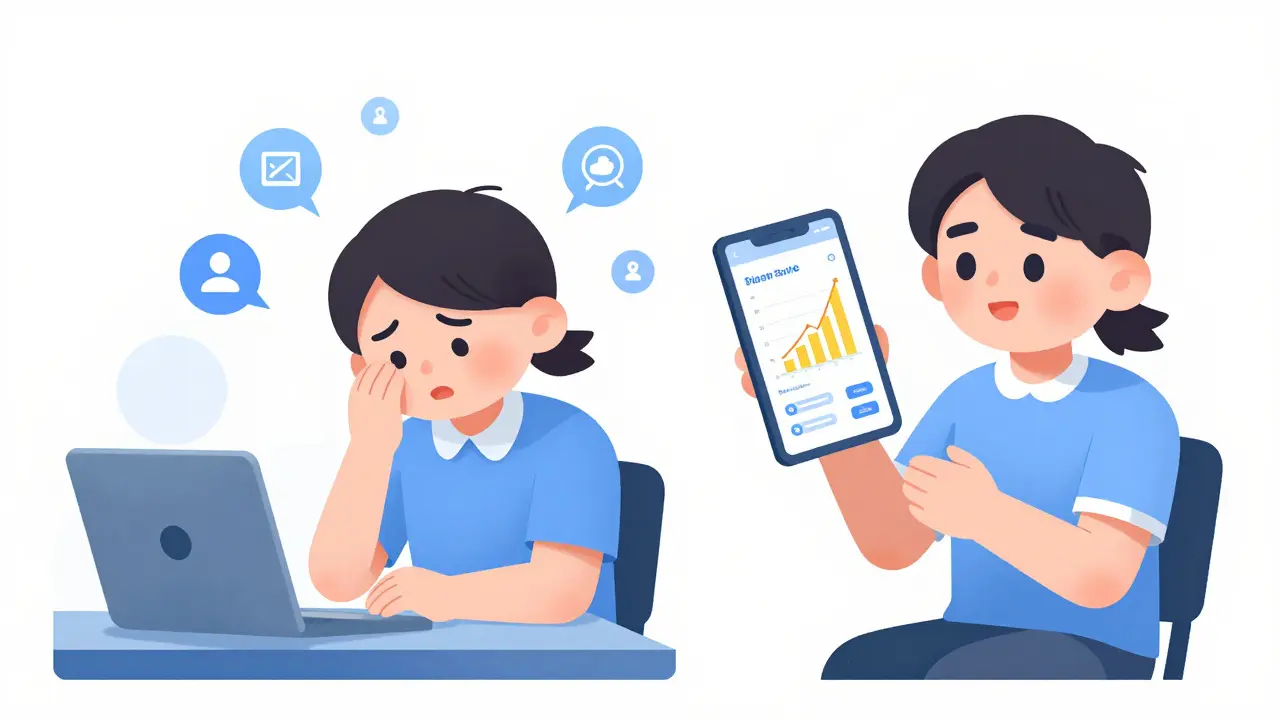
Take the PROSPER Consortium, a group formed in 2012 by the FDA, EMA, drug companies, and patient advocates. Their data shows PROs detect safety signals in 14 days on average. Clinician reports? 42 days. That’s nearly a month earlier. For drugs treating cancer, rare diseases, or chronic pain, that time gap can mean the difference between adjusting a dose and hospitalization.
One breast cancer patient on the MedHelp forum shared how using a PRO app helped her oncologist lower her medication dose before she ended up in the ER. “I wouldn’t have spoken up during my regular visit,” she said. “But the app made it easy-and it saved me.”
These aren’t isolated stories. A 2022 survey of 1,247 patients across 12 trials found 78% felt PRO reporting made them more involved in their care. And 65% said they felt heard by researchers. That’s powerful. It turns passive patients into active partners in safety.
But It’s Not Perfect-And Here’s Why
PROs aren’t magic. They come with real challenges.
First, recall bias. If you’re asked to report symptoms from last week, your memory fades. Studies show accuracy drops by about 25% for events older than seven days. That’s why daily reporting matters.
Second, not everyone can use apps. Older adults, people with low digital literacy, or those without smartphones may be left out. This creates a gap in data. If only tech-savvy patients report, the safety picture becomes skewed.
Third, too many surveys can backfire. On Reddit, one patient wrote: “I had to fill out three different questionnaires three times a week. It felt like a job.” That’s called survey burden. When it’s overwhelming, people stop responding-or lie to get through it.
And here’s the quietest problem: no feedback. In the same 2022 survey, 68% of patients said they never saw how their reports changed anything. If you report fatigue for months and nothing happens, you stop reporting. Engagement dies.
What’s Next? AI, Wearables, and the Future of Your Voice
The field is evolving fast. Roche is now using AI to scan patient messages and extract adverse events with 82% accuracy. Pfizer tested smartwatches that tracked scratching in eczema patients-73% of patient-reported itch matched wearable data. Novartis is using blockchain to keep PRO data secure and private.
Regulators are catching up too. The FDA’s 2022 draft guidance requires standardized PROs in all new cancer drug applications. By 2026, the European Medicines Agency plans to require PRO data for nearly all new drug approvals.
But the biggest change isn’t technology. It’s mindset. The FDA, PCORI, and other agencies now say: “Don’t measure what’s easy to measure. Measure what matters to patients.” That’s the core of PROs.
What You Can Do Right Now
If you’re taking a new drug-especially one for cancer, chronic pain, or mental health-ask:
- Is there a PRO app or tool I can use to report side effects?
- Can I report symptoms between visits, not just at appointments?
- Will my feedback actually be reviewed, and will I be told how it’s used?
Don’t wait for your doctor to bring it up. If your trial or treatment offers PRO reporting, use it. Even if it’s just five minutes a day. Your input helps shape safer drugs for everyone.
If you’re not in a trial but taking a prescription, talk to your pharmacist or doctor. Ask if your medication’s safety profile includes patient-reported data. It might surprise you.
PROs aren’t about being a good patient. They’re about being an informed one. Your voice isn’t noise-it’s data. And that data saves lives.
What exactly are Patient-Reported Outcomes (PROs)?
Patient-Reported Outcomes (PROs) are direct reports from patients about their health, symptoms, and treatment experiences, without interpretation by doctors or researchers. These reports are collected using validated questionnaires and are used to understand how a drug affects daily life-not just clinical lab results.
How do PROs improve drug safety compared to traditional methods?
Traditional safety monitoring relies on doctors reporting side effects during visits. But many symptoms-like fatigue, brain fog, or mild nausea-are never mentioned because they’re seen as “normal” or too personal. PROs capture these hidden effects. Studies show patients report 30-40% more side effects than clinicians do, especially for subjective symptoms. This leads to earlier detection of safety issues and more accurate benefit-risk assessments.
Are PROs only used in clinical trials?
No. While PROs were first used in trials, they’re now required for regulatory approval of new drugs, especially in oncology and rare diseases. Regulatory agencies like the FDA and EMA now expect PRO data in marketing applications. Some post-market safety systems also collect PROs from patients using approved drugs to monitor long-term effects.
Why do some patients feel overwhelmed by PRO surveys?
Some PRO tools ask too many questions too often. A patient might be asked to complete three different questionnaires three times a week, which can feel like a second job. This is called “survey burden.” Too much of it leads to fatigue, inaccurate responses, or people dropping out. Good PRO programs balance thoroughness with simplicity and use automated reminders to reduce drop-off rates.
Can PRO data be trusted if patients aren’t medical experts?
Yes-because PROs don’t require medical expertise. They ask you to describe your own experience: “How often did you feel tired?” “On a scale of 0-10, how much pain did you have?” These are personal observations, not clinical diagnoses. The tools are validated to ensure consistency and reliability. The key isn’t medical knowledge-it’s honesty and consistency in reporting.
What if I don’t have a smartphone or internet access?
Many PRO programs still offer paper-based or phone-based reporting options. If you’re in a clinical trial, ask the study team about alternatives. For post-market reporting, some health systems allow you to call in your symptoms. The goal is to include everyone, not just those with digital access. Equity in PRO collection is a growing focus for regulators and researchers.
Do PROs really change how drugs are approved or used?
Absolutely. In 2022, the FDA required PRO data for all new cancer drug applications. In one case, PRO data showed a drug caused severe fatigue in 60% of patients-far higher than clinicians reported. That led to a revised dosing schedule and clearer warnings on the label. PROs don’t just inform-they influence approval decisions, labeling changes, and risk management plans.

Josh Kenna
so i’ve been on this new med for 3 months and i never told my doc about the brain fog till i started using the app-turns out i wasnt the only one. they lowered my dose and now i can actually finish a book. why do we wait till we’re almost dead to speak up?
Malikah Rajap
you know… it’s not just about data… it’s about dignity. when you’re told your fatigue is “normal”… but your body screams otherwise… and then someone listens… that’s not medicine. that’s humanity. and yes, i cried when my report actually changed my treatment plan. it’s not just numbers-it’s your soul being seen.
Jake Rudin
the real question isn’t whether PROs work-it’s whether we’ve ever truly believed that subjective experience holds epistemological weight in clinical science. for centuries, we privileged the objective, the quantifiable, the visible… but pain? fatigue? brain fog? these are phenomenological realities. if we dismiss them because they’re not lab values… we’re not practicing medicine-we’re practicing metaphysical exclusion.
Lydia H.
my mom’s 72 and doesn’t own a smartphone. she uses a paper form her nurse mails her. she says it’s the only thing that makes her feel like she’s not just a chart number. if we’re gonna call this patient-centered care… then let’s actually include the people who don’t have Wi-Fi.
Astha Jain
obviously, only the elite tech-savvy get to have their voices heard. the rest of us? we’re just data ghosts. and the pharma companies? they’re laughing all the way to the bank while we’re stuck filling out 10-question surveys every damn day. #capitalismkills
Phil Hillson
why are we even doing this? everyone knows patients lie. they say they’re fine so they don’t get their meds pulled. this whole system is a glorified popularity contest. i’ve seen too many trials get derailed by one guy who says ‘i felt sad on tuesday’ and suddenly it’s a black box warning
Erwin Kodiat
in india, we have this phrase: ‘dard ko samjho, dawa nahi.’ understand the pain, not just the drug. PROs are the first time western medicine is finally listening. i’ve been on 3 different meds for chronic pain. only once did someone ask me how i actually felt. that one time changed everything.
Valerie DeLoach
if we want real equity in healthcare, we need to design PRO tools that don’t assume digital privilege. voice-based reporting, community health worker follow-ups, even faxed forms-these aren’t archaic. they’re necessary. your voice matters. but only if the system is built to hear you, not just collect you.
Jacob Hill
the FDA’s PRO-CTCAE tool? it’s brilliant. 78 items, all validated. but here’s the kicker: they tested it with over 500 patients across 12 languages. that’s not just science-that’s respect. and if your app doesn’t use something like that? it’s not PRO. it’s noise.
Aman Kumar
you think this is about safety? think again. this is a corporate control mechanism. they want you to self-report so they can shift liability. ‘you said you felt fine’-but you didn’t fill out the survey? then it’s your fault. this isn’t patient empowerment-it’s corporate insurance.
Christi Steinbeck
if you’re on a med and not using a PRO tool-you’re doing yourself and everyone else a disservice. five minutes a day. that’s all. your fatigue might be the clue that saves the next person from hospitalization. don’t be silent. speak up. it matters.
Lewis Yeaple
the statistical validity of patient-reported outcomes remains contingent upon instrument reliability, response consistency, and the absence of selection bias. while anecdotal narratives are emotionally compelling, they do not constitute generalizable evidence without rigorous psychometric validation and longitudinal tracking.
Jackson Doughart
i used to think my brain fog was just stress. then i started logging it daily. turned out it spiked every time i took the pill at night. switched to morning. no more 3 p.m. crashes. i didn’t know my body was trying to talk to me… until someone gave me the microphone.
Josh Kenna
^^^ this. i did the same thing. took it at night like the label said. kept nodding off at work. logged it. doc said ‘try mornings.’ boom. i’m alive again. why do we still treat patients like passive recipients? we’re the ones living this.