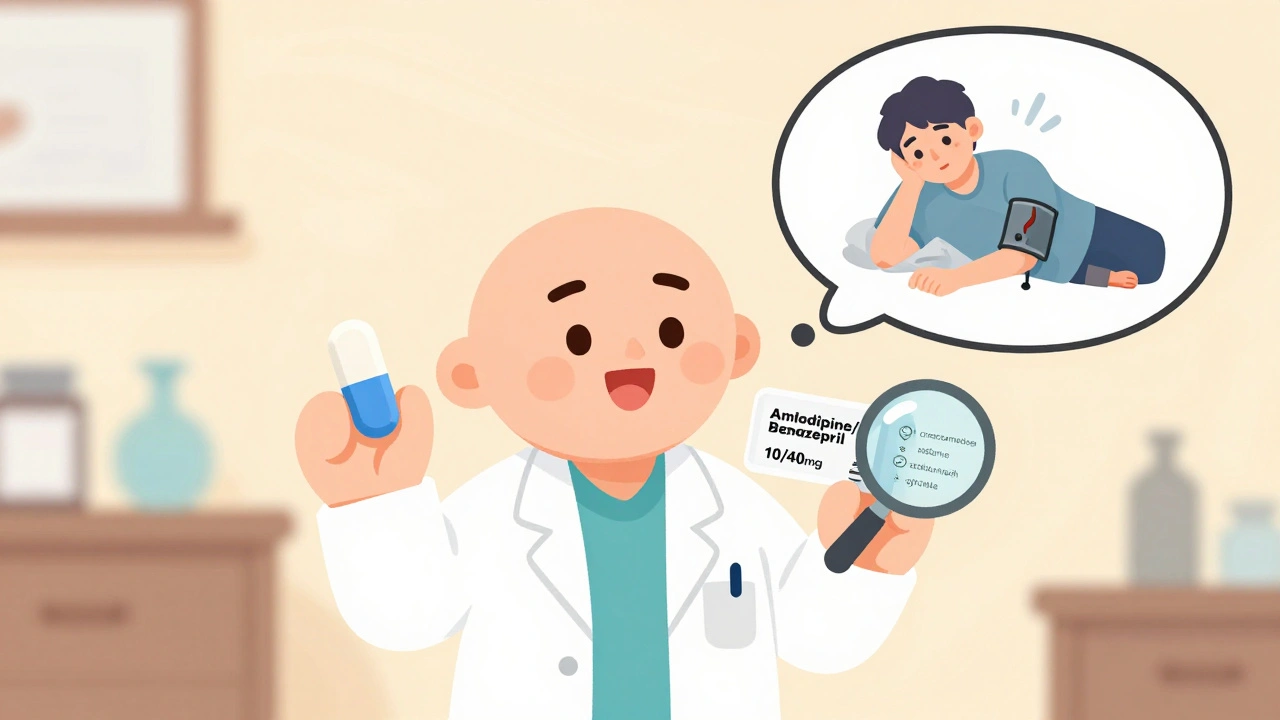
When two drugs are combined into one pill - like amlodipine and benazepril for high blood pressure, or ezetimibe and simvastatin for cholesterol - pharmacists and doctors assume they can swap one brand for another without risk. But what happens when the doses aren’t identical, or the inactive ingredients change? Therapeutic equivalence sounds simple: same active ingredients, same strength, same effect. In theory, yes. In practice, it’s far more complicated.
What Therapeutic Equivalence Really Means
Therapeutic equivalence isn’t just about having the same chemicals in the pill. The U.S. FDA defines it strictly: two products must have identical active ingredients, in the same amount, in the same dosage form, taken the same way, and meet the same quality standards. Only then can they get an ‘A’ rating in the Orange Book. That’s the official list that tells pharmacists which generics can be swapped without worry. But here’s the catch: a drug like tramadol plus acetaminophen isn’t just the sum of its parts. The two work together in ways that aren’t linear. One might boost the other’s effect, or slow how fast it’s absorbed. That’s why dose equivalence for combinations isn’t as simple as saying, “This 37.5mg/325mg pill is the same as that one.”Why Different Doses in Combination Products Break the Rules
The FDA allows generic versions of combination drugs - but only if they match the original exactly. That includes the ratio of active ingredients. If the brand uses 5mg of drug A and 10mg of drug B, the generic must match that 1:2 ratio. But what if a manufacturer makes a version with 2.5mg of drug A and 5mg of drug B? It’s the same ratio - but now it’s a different strength. That’s not therapeutic equivalence. That’s a different product. Pharmacists sometimes get confused when a patient’s prescription says “amlodipine/benazepril 5/20mg” but the pharmacy has only the 10/40mg version in stock. Swapping them might seem logical - double the dose - but that’s not therapeutic equivalence. That’s dose escalation. And if the patient is elderly or has kidney issues, doubling could cause dangerous drops in blood pressure.Narrow Therapeutic Index Drugs: Where Equivalence Gets Dangerous
Some drugs have almost no room for error. Warfarin, levothyroxine, phenytoin - these are narrow therapeutic index (NTI) drugs. A 10% change in dose can mean the difference between control and crisis. When these drugs are combined with others - say, levothyroxine with a statin - even tiny formulation differences matter. A 2018 study in the Journal of Clinical Endocrinology & Metabolism found that 12% of patients switching between generic levothyroxine products had abnormal thyroid levels - even though both met FDA bioequivalence standards. Why? Because the inactive ingredients affected how the drug dissolved. One used croscarmellose sodium; another used sodium starch glycolate. For a patient on a combo like levothyroxine + atorvastatin, that difference could throw off both drugs. The FDA now requires tighter bioequivalence standards for NTI drugs: 90-111% instead of the usual 80-125%. But that still leaves room for error. And when you add a second NTI drug into the mix? The risk multiplies.
Combination Products vs. Single-Drug Generics
Single-drug generics are easier to manage. If you swap one generic metformin for another, the outcome is usually the same. But combination products? They’re like a recipe. Change the flour, the yeast, the baking time - and the cake turns out differently. Take Advair Diskus: fluticasone and salmeterol in one inhaler. The generic version was approved as therapeutically equivalent - and cost 40% less. That’s great. But behind the scenes, the generic used different propellants and particle sizes. For most patients, no problem. But for someone with severe COPD who relies on precise lung deposition, that difference could mean less drug reaches the airways. The FDA allows these changes if they don’t affect bioequivalence. But “doesn’t affect” is based on group averages - not individual patients. And in combination therapy, the individual matters more.Real-World Mistakes: What Happens When Substitutions Go Wrong
A pharmacist in Ohio reported three dose errors in six months just from switching between different strengths of amlodipine/benazepril combinations. The prescription said 5/20mg. The pharmacy had 10/40mg. The pharmacist assumed it was “the same ratio,” so they dispensed one pill instead of two. The patient ended up in the ER with low blood pressure. Another case: a patient switched from brand-name Vytorin (ezetimibe/simvastatin) 10/20mg to a generic. Her LDL cholesterol jumped 15%. Her doctor thought it was non-compliance. Turns out, the generic used a different coating that slowed absorption. The combo didn’t work the same way. The FDA’s adverse event database logged 247 incidents in 2022 from dose conversion errors in combination products. Nearly 40% involved heart meds. Another 30% were psychiatric - like fluoxetine/olanzapine or sertraline/bupropion. These aren’t rare mistakes. They’re systemic.
How to Manage Combination Drug Substitutions Safely
There’s no perfect system. But here’s what works:- Check the Orange Book. Don’t assume. Look up the exact brand and generic by active ingredient, strength, and dosage form. If the TE code is ‘A,’ it’s approved for substitution. If it’s ‘B,’ don’t substitute - there’s a known issue.
- Never swap strengths. Even if the ratio is the same. A 5/20mg combo is not interchangeable with 10/40mg. That’s a new prescription.
- Watch for NTI drugs. If the combo includes warfarin, levothyroxine, or phenytoin, avoid substitutions unless absolutely necessary. And if you do, monitor lab values closely for at least 72 hours.
- Use barcode scanning. Many hospitals now require scanning both the prescription and the pill bottle before dispensing. This catches strength mismatches and wrong generics.
- Document every switch. Note the brand, generic, manufacturer, lot number, and date. If a patient has a reaction, you need to trace it back.
What’s Changing - and What’s Coming
The FDA is working on new tools. In early 2023, they released draft guidance for complex combination products - especially those where dose effects aren’t linear. They’re also testing machine learning models that predict which generic substitutions might fail based on formulation details. Early results? 89% accurate. Some experts are pushing for an ‘A*’ rating - a special category for combination products that have been tested across multiple strengths. Right now, each strength must be evaluated separately. That’s inefficient. But until we have better data, we can’t assume. The bigger shift? Personalized medicine. By 2030, the NIH predicts 30% of therapeutic equivalence decisions will include genetic data. Someone with a slow-metabolizer CYP2D6 gene might need a lower dose of sertraline in a combo with bupropion. A one-size-fits-all equivalence rating won’t cut it anymore.Bottom Line: Equivalence Isn’t Always Safe
Therapeutic equivalence is a powerful tool for cutting costs. Generic combination drugs saved the U.S. healthcare system over $1.7 trillion in the last decade. That’s huge. But saving money shouldn’t mean risking safety. When you’re dealing with multiple drugs in one pill - especially with NTI components - equivalence is a starting point, not a guarantee. Patients aren’t data points. They’re individuals with unique metabolisms, kidney function, and sensitivities to inactive ingredients. Always verify. Always double-check. And never assume that because two pills have the same name, they’re the same.Can I substitute a generic combination drug for the brand even if the dose is different?
No. Therapeutic equivalence requires identical active ingredient strengths. If the generic has a different dose - even if the ratio is the same - it’s not a substitute. You must get a new prescription. Swapping strengths can lead to under- or overdosing, especially with drugs like blood pressure or psychiatric combos.
Are all generic combination drugs safe to switch to?
Not always. While most get an ‘A’ rating from the FDA, differences in inactive ingredients can affect absorption - especially with narrow therapeutic index drugs like levothyroxine or warfarin. A 2018 study found 12% of patients had abnormal lab results after switching levothyroxine generics. Always monitor patients closely after switching, especially if they’re on multiple NTI drugs.
What’s the difference between a pharmaceutical equivalent and a therapeutic equivalent?
A pharmaceutical equivalent has the same active ingredients, strength, dosage form, and route - but may differ in inactive ingredients or shape. A therapeutic equivalent is a pharmaceutical equivalent that has been proven to work the same way in the body. Only therapeutic equivalents get an ‘A’ rating in the FDA’s Orange Book and are approved for substitution.
Why do some combination drugs have ‘B’ ratings in the Orange Book?
A ‘B’ rating means the FDA hasn’t confirmed bioequivalence. This often happens with 505(b)(2) applications - where the generic uses different inactive ingredients, manufacturing methods, or delivery systems. It doesn’t mean the drug is unsafe - just that it hasn’t been proven to behave the same in the body as the brand. Don’t substitute these without consulting a pharmacist or prescriber.
How can pharmacists reduce errors with combination drug substitutions?
Use the Orange Book to verify TE codes, never swap strengths, scan barcodes before dispensing, maintain a 72-hour monitoring window for high-risk patients (like those on NTI drugs), and document every substitution. Training staff on the difference between ratio and strength is critical - most errors come from assuming a 5/20mg is interchangeable with 10/40mg.

Andrea Petrov
So let me get this straight - the FDA lets companies change the *inactive* ingredients in life-saving combo drugs, and we’re supposed to trust that it’s ‘the same’? 😒
Ever heard of glyphosate in pills? Or talc that turns into asbestos when it gets damp? No? Good. Because they don’t tell you. This isn’t science - it’s corporate theater with a FDA stamp.
I’ve seen patients crash after switching generics. One guy went from 120/80 to 78/45 in 3 hours. They blamed him for ‘not taking it right.’
Meanwhile, the same pharma companies are lobbying to remove the Orange Book’s ‘B’ ratings because ‘it confuses pharmacists.’
Confuses them? Or makes them stop asking questions?
They don’t want transparency. They want profit. And we’re the lab rats.
Next thing you know, they’ll be selling ‘generic’ insulin made in a basement with a 3D printer.
And we’ll all be told it’s ‘therapeutically equivalent.’
Don’t believe the hype. Check the lot number. Demand the brand. Or don’t be surprised when your heart gives out.
They’re not saving you money. They’re saving their quarterly earnings.
And you’re the sacrifice.
Suzanne Johnston
It’s fascinating how we treat medicine like a Lego set - snap the pieces together and assume the structure holds.
But biology isn’t modular. It’s messy. Contextual. Emergent.
Two pills may contain the same molecules, but the body doesn’t care about molecular formulas - it cares about kinetics, dissolution, pH, and the silent dance of excipients.
That’s why a 10/40mg pill isn’t just ‘double’ a 5/20mg - it’s a different physiological experience.
And yet, we’ve built entire systems on the illusion of equivalence.
We call it efficiency. But it’s actually a form of epistemic arrogance.
What if we stopped assuming sameness and started asking: ‘How is this different?’
Not to scare people - but to respect them.
Because patients aren’t variables. They’re people with unique metabolisms, histories, and vulnerabilities.
Maybe the real problem isn’t the generics - it’s our refusal to see complexity as sacred.
Graham Abbas
OH MY GOD. I JUST HAD A PATIENT WHO SWITCHED FROM VYTORIN TO GENERIC AND HER LDL WENT FROM 98 TO 118.
HER DOCTOR THOUGHT SHE WASN’T TAKING IT.
SHE WAS. BUT THE COATING ON THE GENERIC WAS LIKE A TIN CAN - IT WOULDN’T DISSOLVE PROPERLY.
I’M TELLING YOU - THIS ISN’T JUST A PHARMACY ISSUE.
IT’S A SYSTEMIC FAILURE.
WE’RE USING GROUP AVERAGES TO DECIDE INDIVIDUAL TREATMENT.
THAT’S LIKE SAYING ‘ALL CARS WITH 200 HP ARE THE SAME’ - THEN WONDERING WHY ONE CAN’T CLIMB A HILL.
AND THE FDA? THEY’RE STILL USING 1980S MATH TO EVALUATE 2020S DRUGS.
WE NEED TO STOP CALLING THIS ‘EQUIVALENCE’.
WE NEED TO CALL IT ‘APPROXIMATION’.
AND THEN TREAT IT LIKE THE RISK IT IS.
WHY ISN’T THIS ON THE FRONT PAGE OF THE NYTIMES?
Haley P Law
YOOOOO I JUST HAD MY PHARMACIST SWAP MY AMLODIPINE/BENAZEPRIL FROM 5/20 TO 10/40 AND I FELT LIKE I WAS GOING TO PASS OUT 😵💫
THEY SAID ‘IT’S THE SAME RATIO’ AND I WAS LIKE ‘BRO I’M NOT A MATH PROBLEM’
WENT TO ER. GOT CHARGED $800. NOW I ONLY TAKE BRAND.
WHY DO THEY DO THIS TO US??
IT’S NOT EVEN CHEAPER IF YOU FACTOR IN THE ER VISIT 😭
PS: I’M TELLING EVERYONE. THIS IS A SCAM.
Andrea DeWinter
Look I've been a pharmacist for 18 years and this is the #1 thing we get wrong
People think if the ratio is the same it's interchangeable
It's not
5/20 is not the same as 10/40 even if it's 1:2
It's a different dose
And if the patient is elderly or has kidney disease doubling the dose can kill them
Always check the Orange Book
Never assume
And if you're on a NTI drug like levothyroxine or warfarin - don't even think about swapping
Document everything
Barcode scan everything
And if your pharmacy gives you a different strength - say no
It's not about being difficult
It's about staying alive
And yeah I know it's a pain
But so is ending up in the hospital
Trust me I've seen it too many times
Just don't let them talk you into it
It's not worth it
Steve Sullivan
bro i used to think generics were fine until my mom switched from brand to generic sertraline/bupropion and she went from ‘fine’ to ‘i think i’m dying’ in 3 days
she was crying, couldn’t sleep, kept saying ‘the world is too loud’
doc thought she was depressed again
turns out the generic had a different filler that slowed absorption
took her 2 weeks to stabilize
we’re talking about brain chemistry here
not cereal
and the FDA says ‘it’s equivalent’??
equivalent to what? a group average?
what about the 1 in 10 who react differently?
we treat people like data points and then wonder why stuff goes wrong
also i’m starting to think the Orange Book is just a marketing brochure
and ‘A’ rating = ‘we didn’t get sued yet’
pls stop pretending this is science
George Taylor
...And yet, we still allow this. We still permit the substitution of combination drugs with different strengths under the guise of ‘therapeutic equivalence.’
How many deaths? How many ER visits? How many lives ruined before someone admits this is not a ‘systemic flaw’ - it is a systemic failure?
And who benefits? Not the patient. Not the doctor. Not even the pharmacist. The pharmaceutical conglomerates. The ones who fund the FDA’s advisory panels. The ones who write the guidelines.
Let’s be honest: this isn’t negligence. It’s complicity.
And now, they’re talking about ‘machine learning models’ to predict failures?
Why didn’t they use machine learning to predict this 15 years ago?
Because they didn’t want to know.
And now, they’re offering ‘A*’ ratings?
That’s not innovation.
That’s damage control with a PowerPoint.
Arun Kumar Raut
in india we face same problem
many patients take combo pills for blood pressure
pharmacists give different strength because cheaper
patient don't know difference
many get dizzy, faint
we need simple posters in pharmacies
‘same ratio ≠ same pill’
and train pharmacists better
not all are bad
but many just want to sell fast
we need awareness
not just rules
patients must ask: ‘is this the exact medicine?’
not ‘is this cheaper?’
life is not a discount
Angela R. Cartes
Ugh. I just read this whole thing and I’m exhausted.
So… what? We can’t trust anything anymore?
Every pill is a gamble?
And now I have to check the Orange Book like it’s a Netflix subscription?
Can we just… not?
I mean, I get it. I really do.
But this is why I stopped taking meds.
Too much stress.
Too many variables.
Too many people telling me I’m ‘not being careful enough.’
Meanwhile, I’m just trying to survive.
Why does medicine have to be this complicated?
Can’t we just… make one pill that works?
And leave it at that?
😭
iswarya bala
my aunt took generic combo for thyroid and heart and she got sick
we thought she ate bad food
then we found out the generic had different stuff inside
now she only takes brand
even if it cost more
her life is worth it
dont be cheap with your health
its not a grocery list
your body dont care about savings
it just want to work
so ask for exact one
and if they say no
go to other pharmacy
your life is more important than 10 dollar