
JAK inhibitors are changing how we treat autoimmune diseases like rheumatoid arthritis, psoriasis, and alopecia areata. Unlike biologics that require injections, these drugs come as pills - a huge convenience for patients. But they’re not without risks. Since their first approval in 2012, JAK inhibitors have become a go-to option for people who don’t respond to traditional treatments. Yet, with their power comes responsibility: careful patient selection and strict monitoring are non-negotiable.
How JAK Inhibitors Work
JAK inhibitors block specific enzymes - Janus kinases - that sit inside immune cells and help send inflammatory signals. When cytokines like interleukin-6 or interferon bind to receptors on the cell surface, they activate JAK proteins. These proteins then turn on STAT proteins, which rush into the nucleus and switch on genes that cause inflammation. JAK inhibitors stop this chain reaction by latching onto the enzyme’s active site, preventing it from doing its job.
Not all JAK inhibitors are the same. Tofacitinib and baricitinib block JAK1 and JAK2, while upadacitinib is more selective for JAK1, which may reduce side effects. Abrocitinib targets JAK1 with high precision, making it effective for eczema. Ritlecitinib works differently - it binds permanently to JAK3, a unique mechanism that could mean longer-lasting effects. Deuruxolitinib, approved in June 2024 for hair loss, follows a similar path. This selectivity matters: the more targeted the drug, the less it messes with other systems in the body.
Why They’re Popular - and Why They’re Controversial
Patients love JAK inhibitors because they work fast. Many see improvement in joint pain or skin rashes within two weeks. Compare that to biologics, which often take 8 to 12 weeks to show results. The convenience of a daily pill over weekly injections is a game-changer. A 2023 survey of over 1,200 patients found 92% preferred oral meds over shots.
But the benefits come with serious trade-offs. In 2022, the FDA added black box warnings to all JAK inhibitors - the strongest safety alert possible. These drugs increase the risk of serious infections, blood clots, heart attacks, strokes, and certain cancers. The ORAL Surveillance study, which tracked over 4,000 rheumatoid arthritis patients for nearly a decade, found a 49% higher risk of cancer and a 31% higher risk of major heart events compared to TNF inhibitors.
Real-world reports back this up. On patient forums like Reddit, people share stories of clearing up years of eczema in days - then getting shingles twice. Others note spikes in LDL cholesterol, sometimes over 190 mg/dL. These aren’t rare side effects. About 41% of users on online communities report significant lipid increases, and 23% experience herpes zoster reactivation - far higher than with biologics.
Who Should Take Them - and Who Should Avoid Them
These drugs aren’t for everyone. The 2024 ACR/EULAR guidelines clearly state: avoid JAK inhibitors in patients over 65, those with a history of cancer, or anyone with uncontrolled cardiovascular risk factors like smoking, high blood pressure, or diabetes.
They’re best suited for younger, otherwise healthy adults who haven’t responded to methotrexate or TNF blockers. Patients with multiple conditions - say, rheumatoid arthritis plus psoriasis - may benefit most because one pill can treat both. But if you’ve had a heart attack, a blood clot, or a skin cancer removed in the past five years, these drugs are likely off the table.
Doctors in the U.S. are more willing to prescribe them early - about 32% use them as first-line after methotrexate. In Europe, that number drops to 18% because regulators are stricter. In Australia, most rheumatologists follow the European model: try biologics first, then consider JAK inhibitors only if those fail.
Monitoring Is Not Optional
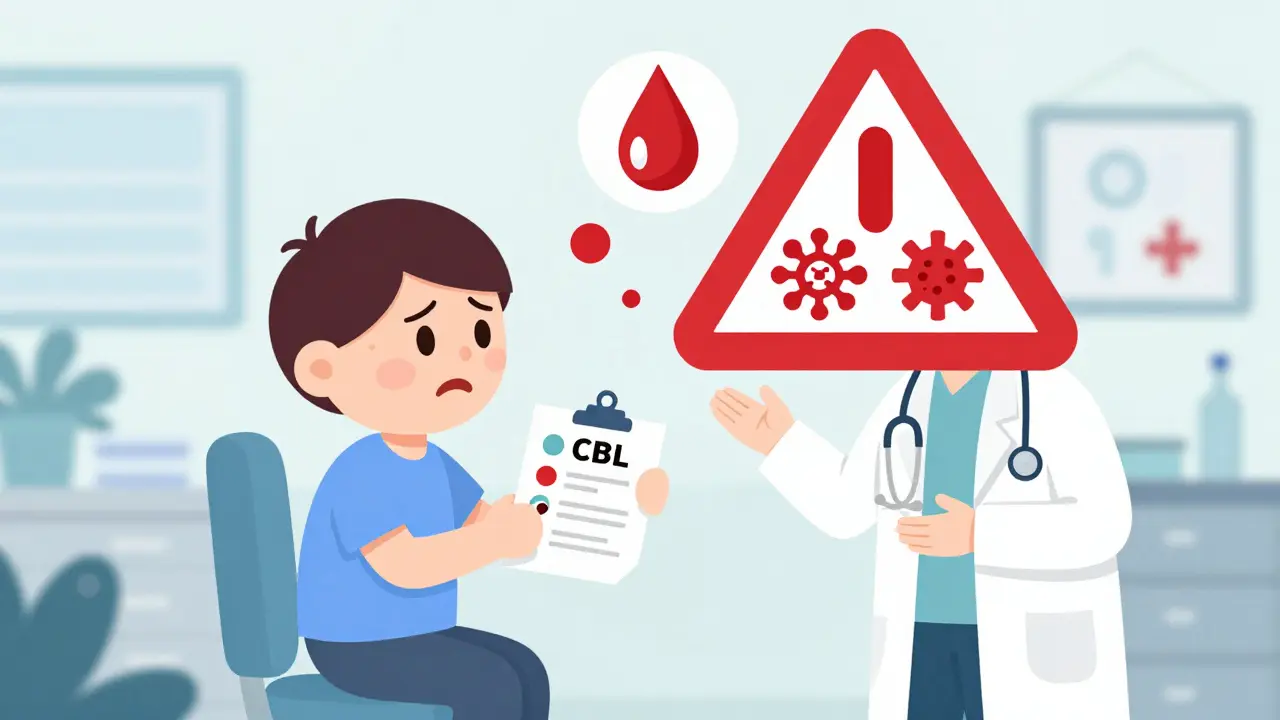
Starting a JAK inhibitor isn’t a one-time prescription. It’s the beginning of ongoing medical oversight. The American College of Rheumatology requires specific baseline tests before the first dose:
- Complete blood count (CBC)
- Liver function tests (ALT, AST)
- Lipid panel (LDL, HDL, triglycerides)
- Tuberculosis screening (PPD or blood test)
- Vaccination status check (especially varicella-zoster virus)
After that, monitoring happens every three months for the first year, then every six months. If your lymphocyte count drops below 500 cells/μL, you stop the drug. If your hemoglobin falls below 8 g/dL, you’re at risk for anemia. Liver enzymes more than three times the upper limit? Pause treatment. LDL above 190 mg/dL? Start a statin.
Many clinics still struggle with this. A 2023 survey found that 68% of European practices don’t vaccinate patients against shingles before starting treatment - even though the EMA recommends it. That’s dangerous. Shingles isn’t just a rash; it can lead to nerve pain that lasts for months or years.
Real Patient Experiences
One patient in Brisbane, 54, started baricitinib after three biologics failed. Within six weeks, her swollen joints dropped from 18 to 2. She calls it life-changing. But her LDL jumped from 110 to 178 mg/dL. Her doctor put her on a low-dose statin, and she now gets blood tests every three months.
Another, a 32-year-old with severe atopic dermatitis, took abrocitinib. His skin cleared in 10 days. Then he got shingles. Twice. Now he’s on daily antiviral medication and worried about what’s next. “I’d take the risk again,” he said, “but I wish someone had warned me about the shingles.”
On HealthUnlocked, a woman wrote: “After 10 years of RA, I couldn’t hold my grandkids. Now I can. The cost went up - $15 more per script - but I’d pay double.”

What’s Next?
The field is moving fast. Newer drugs like brepocitinib - a TYK2 inhibitor - are in late-stage trials and may offer better safety. TYK2 blockers target fewer pathways, so they’re less likely to disrupt red blood cell production or cholesterol metabolism. Early data suggests they’ll have lower infection and cancer risks.
Covalent inhibitors like ritlecitinib, which bind permanently to JAK3, could also improve selectivity. And research is expanding into off-label uses: vitiligo, hidradenitis suppurativa, and even lupus. But without long-term data, these uses remain experimental.
By 2027, JAK inhibitors could capture 35% of the atopic dermatitis market. But if safety concerns keep growing, many doctors say they’ll switch patients to newer biologics as soon as they become available. A 2024 Medscape survey found 62% of rheumatologists would make that switch if given the option.
Final Thoughts
JAK inhibitors are powerful tools. They’ve given thousands of people back their lives - pain-free mornings, clear skin, the ability to hold a grandchild. But they’re not magic pills. They’re high-stakes medications that demand respect. If you’re considering one, ask your doctor: What’s my cancer risk? My heart risk? Am I vaccinated? Are my labs normal? Don’t just take the pill. Stay engaged. Stay monitored. Your health depends on it.
Are JAK inhibitors safe for long-term use?
Long-term safety is still being studied. Data from the ORAL Surveillance trial shows increased risks of cancer, heart events, and blood clots after five years of use. These risks are highest in older patients or those with pre-existing conditions. Regular monitoring can help catch problems early, but long-term use requires careful weighing of benefits versus risks. Most guidelines now limit JAK inhibitors to patients without major cardiovascular or cancer risk factors.
How do JAK inhibitors compare to biologics?
JAK inhibitors are oral pills, while biologics are injected or infused. JAK inhibitors work faster - often within weeks - and can target multiple inflammatory pathways at once. Biologics are more selective, usually blocking just one cytokine, which may mean fewer side effects. But biologics can lose effectiveness over time. JAK inhibitors often work when biologics fail, but they carry higher risks of serious infections and blood clots. The choice depends on your health history, preferences, and risk tolerance.
Can I get vaccinated while on a JAK inhibitor?
Live vaccines (like MMR, chickenpox, or nasal flu) are not safe while on JAK inhibitors because your immune system is suppressed. Inactivated vaccines (like flu shots, pneumonia, or COVID-19 boosters) are generally safe, but may not work as well. The best time to get vaccinated is before starting treatment. The EMA recommends varicella-zoster vaccination at least four weeks before beginning therapy. If you’re already on a JAK inhibitor, talk to your doctor about which vaccines are safe and when to get them.
What blood tests do I need while taking a JAK inhibitor?
You need regular blood tests: every 3 months for the first year, then every 6 months. These include a complete blood count (to check white cells, red cells, platelets), liver enzymes (ALT, AST), lipid panel (LDL, HDL, triglycerides), and sometimes kidney function. If your lymphocyte count drops below 500 cells/μL, your doctor will stop the drug. If your LDL rises above 190 mg/dL, you’ll likely start a statin. Monitoring catches problems before they become serious.
Do JAK inhibitors cause weight gain?
JAK inhibitors themselves don’t directly cause weight gain. However, some patients report weight changes due to improved appetite after inflammation is controlled - especially in conditions like rheumatoid arthritis or eczema where pain or itching previously reduced food intake. Others may gain weight due to steroid use before starting JAK inhibitors, or from reduced physical activity during flares. Weight gain isn’t listed as a common side effect, but changes in metabolism or lifestyle can occur.
What happens if I stop taking a JAK inhibitor?
Stopping a JAK inhibitor can cause your autoimmune condition to flare up - sometimes severely. Symptoms like joint pain, skin rashes, or hair loss may return within days or weeks. This doesn’t mean you’re addicted; it means the drug was controlling inflammation. If you stop because of side effects, your doctor will likely switch you to another treatment, such as a biologic or a different JAK inhibitor. Never stop cold turkey without medical guidance.

Rob Sims
Let me get this straight - you’re telling me we’re giving people a daily pill that increases cancer risk by nearly 50% just because they don’t want to inject themselves? Brilliant. Absolute genius. Next we’ll just hand out opioids for headaches and call it ‘patient-centered care.’ The FDA’s black box warning is basically a neon sign saying ‘THIS COULD KILL YOU,’ and yet doctors are prescribing these like they’re Advil. What’s next? Prescribing meth for chronic fatigue? At least the biologics didn’t turn your body into a cancer buffet.
arun mehta
Dear all, 🙏 I am deeply moved by the courage of patients who endure chronic illness and still choose hope over fear. While JAK inhibitors carry serious risks, they also offer dignity - the ability to hold a grandchild, to sleep without pain, to live without constant inflammation screaming through the body. Let us not forget: medicine is not about avoiding risk, but about balancing it with quality of life. I urge all physicians to counsel with compassion, and all patients to monitor with diligence. 🌿💊
Oren Prettyman
It is worth noting, with a degree of academic rigor, that the ORAL Surveillance study, while statistically significant, was conducted on a cohort of patients with established rheumatoid arthritis who were already at elevated baseline risk for cardiovascular events and malignancy. The relative risk increase of 49% for cancer, while alarming, translates to an absolute risk increase of approximately 1.7% over a decade when compared to TNF inhibitors - a figure that, when contextualized within the broader epidemiological landscape of aging populations and environmental carcinogens, becomes less categorically catastrophic than media narratives suggest. Furthermore, the lipid profile changes observed are not unique to JAK inhibitors; they are a known consequence of systemic immunosuppression and inflammatory resolution, which themselves alter hepatic lipid metabolism. To dismiss these agents wholesale is to ignore the nuanced reality of risk-benefit calculus in chronic disease management.
Tatiana Bandurina
So you're telling me that a 32-year-old got shingles twice after taking this drug and still says he'd do it again? That's not bravery, that's denial. And the fact that his doctor didn't even check his varicella status before prescribing? That's malpractice. You think you're saving someone's skin, but you're just trading one disaster for another. And now he's on daily antivirals for the rest of his life. How is that better than an injection? You're not helping - you're just making people dependent on more drugs to fix the side effects of the first drug. Someone needs to stop this.
Philip House
Look, I’m not some anti-pharma nutjob, but this whole JAK thing feels like American medicine on autopilot. We want fast fixes. We want pills. We don’t want to wait. So we slap a label on something that’s basically a chemical blunt instrument and call it innovation. Meanwhile, Europe’s sitting there like, ‘Nah, let’s not turn every patient into a walking CDC case study.’ And Australia? They’re actually thinking. We’re just selling hope in a capsule. And now we’re gonna pay for it in Medicare bills and funeral costs. Don’t get me wrong - I’m glad people feel better. But we’re not fixing the system. We’re just making it more expensive and deadlier.
Sarvesh CK
It is important to recognize that the evolution of pharmacological intervention in autoimmune disease reflects humanity's broader struggle between the desire for immediate relief and the necessity of long-term wisdom. JAK inhibitors, while powerful, are not inherently dangerous - they are tools, and like any tool, their safety depends on the skill and mindfulness of the user. The true failure lies not in the drug, but in the systems that allow for rushed prescriptions, inadequate patient education, and fragmented monitoring. We must not demonize the molecule, but rather elevate the standard of care. A pill is only as safe as the conversation that precedes it - and the follow-up that follows.
Hilary Miller
My mom’s on baricitinib. She can hug her grandkids now. That’s worth the blood tests.
Malik Ronquillo
Shingles twice? Bro. You got the pill, you got the rash. That’s just how it goes. I’d take it too. Life’s short. Skin’s clear. You want to live? Then deal with the consequences. I’ve seen people in wheelchairs at 40. This is better than that. Just get your labs done and stop whining.