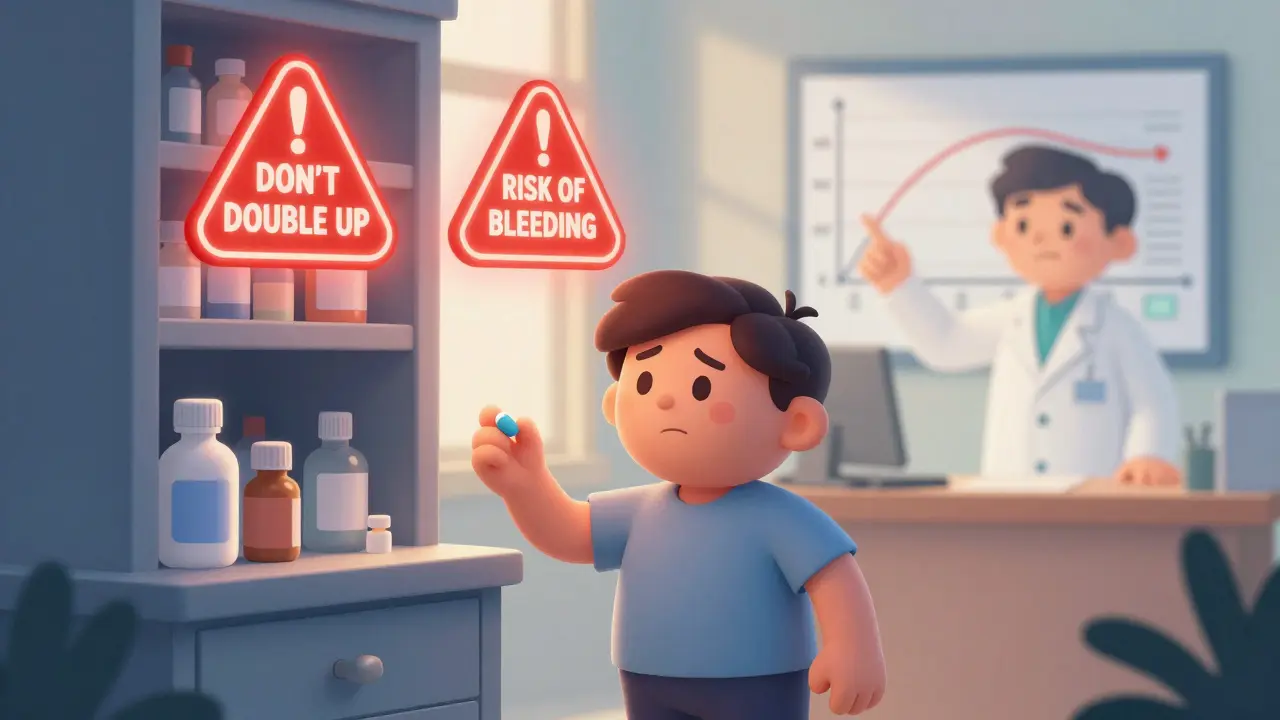
Skipping a pill happens. Maybe you were rushed in the morning, forgot while traveling, or got distracted by a phone call. The instinct? Take two now to make up for it. But that’s exactly what you should never do.
Taking a double dose isn’t a quick fix-it’s a gamble with your health. For some medications, it can mean hospitalization. For others, it could be life-threatening. The truth is, there’s no universal rule for missed doses. What works for your blood pressure pill won’t work for your thyroid medicine or your birth control. The key is knowing which medication you’re taking and when you realized you missed it.
Why Doubling Up Is Dangerous
Medications are designed to stay in your system at a steady level. Too little, and the drug won’t work. Too much, and it becomes toxic. This balance is especially critical for drugs with a narrow therapeutic index-meaning the difference between a helpful dose and a harmful one is tiny.
Warfarin, digoxin, and antiepileptic drugs fall into this high-risk group. A 2018 study found that nearly 1 in 6 adverse drug events in older adults came from people trying to “catch up” by doubling up. In one documented case, a patient on warfarin took a double dose after forgetting her morning pill. Her INR level spiked to 7.2-over seven times the upper safe limit. She ended up in the ER with internal bleeding.
Even for drugs that seem harmless, like statins or antibiotics, doubling up can cause side effects: nausea, dizziness, liver stress, or even kidney damage. The Medicines and Healthcare products Regulatory Agency (MHRA) estimates that 14.2% of preventable hospital admissions in England stem from people doubling doses after missing one. That’s nearly 100,000 avoidable hospital stays a year.
How Timing Matters: The Half-Life Rule
Not all medications work the same way. The science behind what to do depends on something called half-life-how long it takes for half the drug to leave your body.
Short half-life (under 6 hours): Think blood pressure meds like amlodipine, or painkillers like ibuprofen. If you realize you missed your 8 a.m. dose at 10 a.m., go ahead and take it. But if it’s already 2 p.m., skip it. Waiting too long risks overlapping with your next scheduled dose, pushing levels too high.
Long half-life (over 12 hours): Medications like levothyroxine or some antidepressants stay in your system for days. Missing one dose isn’t urgent. Take it as soon as you remember-even if it’s later that day. If you don’t remember until the next day, just resume your normal schedule. Don’t double up.
Once-daily meds: The NHS and Australian Prescriber agree: if you miss your daily pill and remember it on the same day, take it right away. If you don’t remember until the next day, skip the missed one. No make-up doses.
Twice-Daily Medications: The 6-Hour Window
Many medications-like antibiotics, certain blood pressure drugs, or diabetes pills-are taken twice a day, roughly 12 hours apart. For these, there’s a practical window: if you miss a dose by less than 6 hours, take it as soon as you remember.
Example: Your schedule is 8 a.m. and 8 p.m. You forget your 8 a.m. dose but remember at 11 a.m. That’s only 3 hours late. Take it now. But if you remember at 3 p.m., it’s 7 hours after your missed dose. Skip it. Your next dose is at 8 p.m.-that’s only 5 hours away. Taking it now would mean two doses just 5 hours apart. Too close.
Why 6 hours? It’s the standard buffer most clinicians use to avoid overlapping drug peaks. It’s not arbitrary-it’s based on pharmacokinetic studies showing when concentrations become unsafe.
High-Risk Medications: What to Do
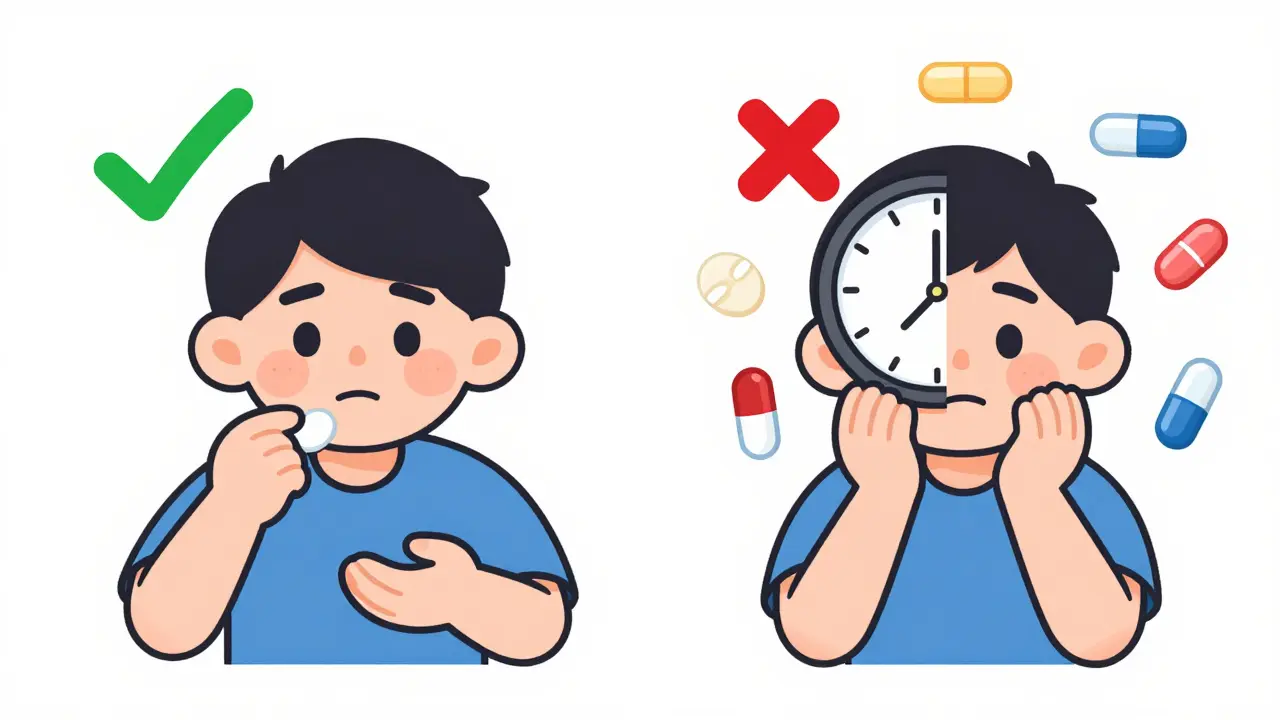
Some drugs demand extra caution. Here’s what to do for the most common ones:
- Warfarin: If you miss your evening dose and remember before midnight, take it. If it’s after midnight, skip it. Never double up. The risk of bleeding skyrockets.
- Antiepileptics (e.g., lamotrigine, valproate): Missing even one dose can trigger a seizure. Take it as soon as you remember, even if it’s close to the next dose. But never double up. Contact your doctor if you miss more than one dose.
- Methotrexate: This one’s critical. The NHS explicitly warns: never take a double dose. Even one extra milligram can cause severe bone marrow suppression. If you miss a dose, skip it and resume your regular schedule the next week.
- Oral contraceptives: If you miss an active pill by less than 12 hours, take it immediately. If it’s more than 12 hours late, take it as soon as you remember but use backup contraception (like condoms) for the next 7 days. If you miss two or more pills in a row, follow the specific instructions on your pack or call your provider.
- GLP-1s (e.g., semaglutide, tirzepatide): You can take a missed dose up to 4 days late. But if you miss two doses in a row (14+ days without the shot), don’t just restart. Talk to your doctor first. Resuming after a long break can cause severe nausea or vomiting in over 20% of patients.
What the Labels Don’t Tell You
Here’s a harsh truth: many medication leaflets don’t give clear instructions. A 2021 review found that 25% of high-risk drugs had no missed-dose guidance in their official documentation. Even worse, 42% of patient leaflets contain conflicting or confusing advice.
Take levothyroxine, for example. Some leaflets say “take it as soon as you remember.” Others say “skip if it’s past noon.” The truth? Because it has a 7-day half-life, timing matters less than consistency. Taking it 2 hours late? Fine. Taking it the next day? Still fine. Doubling up? Never.
That’s why you can’t rely on the pamphlet. You need to know your drug’s risk category. The National Patient Safety Agency classifies meds into three groups:
- Red (high risk): Anticoagulants, antiepileptics, insulin, methotrexate. One missed dose can cause harm. Two missed doses? Dangerous.
- Amber (moderate risk): Blood pressure meds, some diabetes drugs. Missing one dose might raise your numbers, but it won’t cause immediate crisis.
- Green (low risk): Most statins, some vitamins, mild pain relievers. One missed dose? Probably no effect.
If you’re on a red-category drug, treat every missed dose like a red flag. Don’t guess. Call your pharmacist or doctor.
What to Do When You’re Not Sure
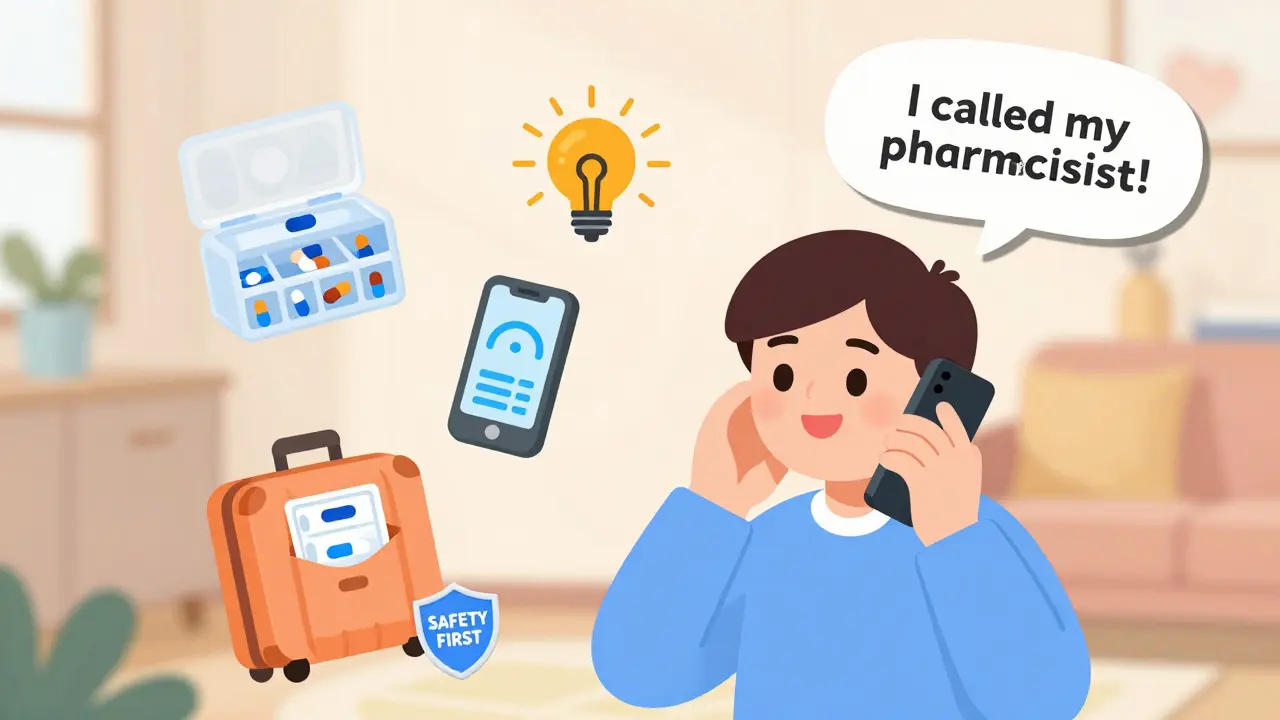
When in doubt, follow this simple rule: Don’t double up. Don’t guess. Call someone.
Your pharmacist is your best resource. They know your full medication list, your health history, and the exact guidelines for each drug. Most community pharmacies offer free Medicines Use Reviews-no appointment needed. They’ll walk you through your schedule, flag risky combinations, and even help you set up reminders.
Apps like MyTherapy or Medisafe can also help. Users report a 42% drop in missed doses after using them. Set alarms, log your doses, and get alerts if you’re due. Some even notify your doctor if you miss multiple doses.
If you accidentally took a double dose, don’t wait. Call your doctor, poison control, or go to urgent care. Symptoms of overdose include dizziness, vomiting, rapid heartbeat, confusion, or bleeding. Don’t assume it’ll “pass.”
Preventing Missed Doses Before They Happen
The best missed dose is the one you never have.
- Use a pill organizer with compartments for morning, afternoon, evening.
- Link your pills to daily habits: take your blood pressure med right after brushing your teeth.
- Set two alarms: one for the time, one 15 minutes later as a backup.
- Keep a spare pill pack in your bag, car, or work drawer.
- Ask your pharmacist about blister packs or automated dispensers if you take 5+ meds daily.
Traveling? Set your phone to your destination time zone. Daylight saving changes? Write down your adjusted schedule ahead of time. A 2022 NHS report found that 12% of medication errors happen during time changes.
Final Reminder: Your Safety Is Non-Negotiable
There’s no such thing as a harmless double dose. Even if you’ve done it before and felt fine, that doesn’t mean it’s safe. Medication effects build up over time. One missed dose might not hurt. But one double dose could.
Every medication has a reason for its schedule. It’s not just about getting better-it’s about staying safe. If you’re ever unsure, pick up the phone. Talk to your pharmacist. It takes 30 seconds. It could save your life.

Jake Moore
Love this breakdown. Seriously, doubling up is such a common mistake-I used to do it with my blood pressure meds until my pharmacist nearly yelled at me. Turns out, my amlodipine has a 30- to 50-hour half-life, so missing one dose? No big deal. Just take it when you remember, even if it’s 8 p.m. The real danger is thinking you’re being ‘responsible’ by doubling. You’re not. You’re just playing Russian roulette with your kidneys.
Eric Gebeke
Wow. Just… wow. People are so lazy these days they’d rather risk an ER visit than set a damn phone alarm. I’ve seen this exact thing happen to my uncle-he took double warfarin because he ‘forgot’ and then blamed the pharmacy for not ‘warning him enough.’ Newsflash: the leaflet was three pages long and had a red box that said ‘DO NOT DOUBLE.’ He still didn’t read it. This isn’t rocket science. It’s basic human responsibility.
Joni O
Thank you for writing this. I’ve been on levothyroxine for 8 years and always panicked when I missed a dose. Now I know it’s fine to take it the next day-no guilt needed. I started using Medisafe last year and my miss rate dropped from 3x/week to once a month. Small wins matter. Also, if you’re on a red-category drug, don’t be shy-call your pharmacist. They’ve seen it all and won’t judge you. Seriously. I cried the first time I called. They were so nice.
Ryan Otto
Let’s be honest: this entire ‘don’t double up’ narrative is a corporate smokescreen. The pharmaceutical industry profits from repeated dosing cycles and emergency interventions. The real issue? They design drugs with narrow therapeutic windows precisely to ensure dependency. Why else would they make methotrexate so unforgiving? It’s not about safety-it’s about lock-in. And don’t get me started on the ‘use an app’ suggestion. Who’s collecting your data? Who’s selling your adherence patterns? This isn’t healthcare-it’s surveillance capitalism in a white coat.
Max Sinclair
This is one of the clearest, most compassionate guides I’ve read on this topic. I especially appreciate how you separated meds by risk level instead of just giving blanket advice. I’ve had patients come in terrified after missing a single pill, and this exact framework helps me reassure them without oversimplifying. Also, shoutout to pharmacists-they’re the unsung heroes of medication safety. If you’re unsure, call them. No shame. No judgment. Just help.
Praseetha Pn
Y’all are missing the REAL problem here. Big Pharma doesn’t want you to know this, but most of these meds are designed to fail you if you miss a dose-so you’ll keep buying them. And the ‘half-life’ stuff? Total BS. They made it up so you’d think it’s science when it’s just marketing. I did a deep dive on Reddit and found a guy who took double lamotrigine and had a seizure… but guess what? He was already on three other meds they didn’t warn him about. The system is rigged. And don’t even get me started on how they hide the side effects in tiny print. You think your pill pack is helping you? Nah. It’s a trap.
Nishant Sonuley
Okay, I’m gonna say something controversial: sometimes, doubling up isn’t the worst idea-if you’re on a green-category drug and you’re just trying to get through a rough day. Like, I missed my statin for two days because I was traveling and had zero access to my pillbox. I took two on day three. Did I turn into a human liver? No. Did I get weirdly tired? A little. But I didn’t die. And honestly? I’ve seen way more people die from not taking their meds at all than from accidentally doubling. The fear-mongering around this is real, but the actual data? Not as scary as they make it sound. That said-yes, for warfarin, methotrexate, or seizure meds? Don’t even joke about it. But for your daily cholesterol pill? Chill. You’re not going to explode. Just… maybe get a pill organizer.
Emma #########
This made me feel so much less alone. I’ve been so scared to miss a dose of my antidepressant-I thought I’d crash if I skipped even one. Reading that it’s okay to wait until the next day if I forget… I cried. Thank you for saying it so gently. I just started using a pill organizer with alarms, and it’s helping. I still forget sometimes, but now I don’t panic. I just take it when I remember. And I call my pharmacist. They always answer. I didn’t know they’d do that.